"What's the worst thing you've ever done?"
For the second time in a week, I've watched something where grown-ups use this question as the basis for a drinking game and it goes very, very wrong (the first was Hacks season five, which I'm not allowed to talk about yet). Is this something real people do? Because it is not my idea of a good time. In The Drama, it brings about a revelation that elicits genuine revulsion, and precipitates a bout of projectile vomiting, which isn't the last in the film, nor, come to think of it, the second last.
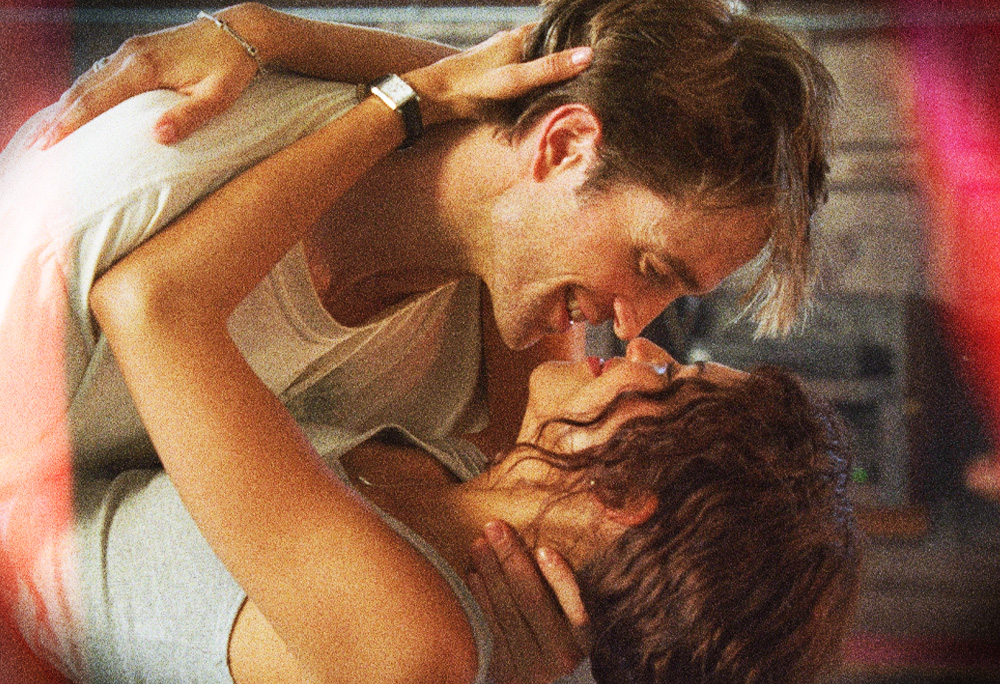
Emma (Zendaya) and Charlie (Robert Pattinson) are a few days out from their wedding. They are young and distractingly hot, have an inexplicably gorgeous apartment in Brooklyn, and are apparently deeply in love. But there are early indications that there's a fault in the foundations of their relationship. The opening scene flashes back to their meet-cute, when Charlie spots her from afar in a coffee shop and, when she gets up to go to the bathroom, takes a photo of the cover of the book she's reading so he can pretend to have read it when he chats her up. The lightly comedic tone makes us feel like this is a white lie rather than creepy, but it does lay down a marker: these people are perhaps not who they are projecting themselves to be. And it's not long before the movie reveals its central concept. The "worst thing you've done" game is suggested less than a quarter of the way in, when Emma and Charlie are milking the skin-contact wine samples at a menu tasting with their friends Rachel (Alana Haim) and Mike (Mamadou Athie).
I'm not going to spoil this much-discussed "twist" here, even though I'm not sure it counts as a twist given it's pretty much the premise of the film. Suffice it to say, Emma reveals something about herself so shocking that it effectively ends her friendship with Rachel on the spot. Charlie, once blinded by devotion, spins out, reevaluating moments from their shared history in a murkier light, and later deletes a slew of compliments from his once-effusive wedding speech, his view of his fiancée having apparently changed.
It's a thought experiment that makes for an interesting premise - what would you do if you found out the person you're closest to in the world did something you just can't understand? Pattinson and Zendaya are both on good form, and the writing is often sharp and grounded, even though the central conceit naturally tips things towards the absurd. But, as I often find with movies that appear to be concept-first, The Drama feels emotionally hollow.
Writer-director Kristoffer Borgli makes a decision to obscure Emma's motivations in that inciting incident, in part you'd imagine because there's no tidy way to explain her behaviour - no answer would feel satisfactory, so greyness is employed. But as a result, her character is very thinly drawn. Charlie has a little more texture, and we spend more time with him as he spirals toward doom. But we never fully understand what Emma sees in him, nor what he sees in her, despite the fact we hear him rehearse the aforementioned speech at the beginning of the film. The side characters, too, feel underbaked - particularly Haim's Rachel, who serves as the movie's moral arbiter but offers little else.
It's a movie full of ideas - about marriage, how we perceive one another, and the perilous state of the USA (which the twist will help you understand). Has Emma really changed? Can Charlie's love for her survive the revelation? Do they actually know each other at all? Does any of that even matter? In an early scene where Emma and Charlie discuss whether or not to actually go ahead with their overly-rehearsed dance, their instructor tells them: "Weddings are performative in nature". She's right, of course, and it makes us wonder about the other less-than-honest aspects of relationships. The movie absolutely works on a philosophical level, at least.
It runs at a fairly tight 1 hour 45, and is light on its feet, too. It builds towards a deeply uncomfortable wedding night that lives up to the promise of the film's long, luxurious marketing campaign. There are some solid laughs, and it all looks pretty good - whatever vague media-adjacent jobs these characters have, they keep them in beautifully lit rooms, with excellently furnished wardrobes. But with so much talent on board here, I wanted to care a lot more.
GQ stories you might have missed:
Sam Campbell was the ice-cold MVP of Last One Laughing season two
SNL UK is making British TV exciting again
HBO Max has launched. How does it rank with the other streamers?
|
|
|
NETFLIX
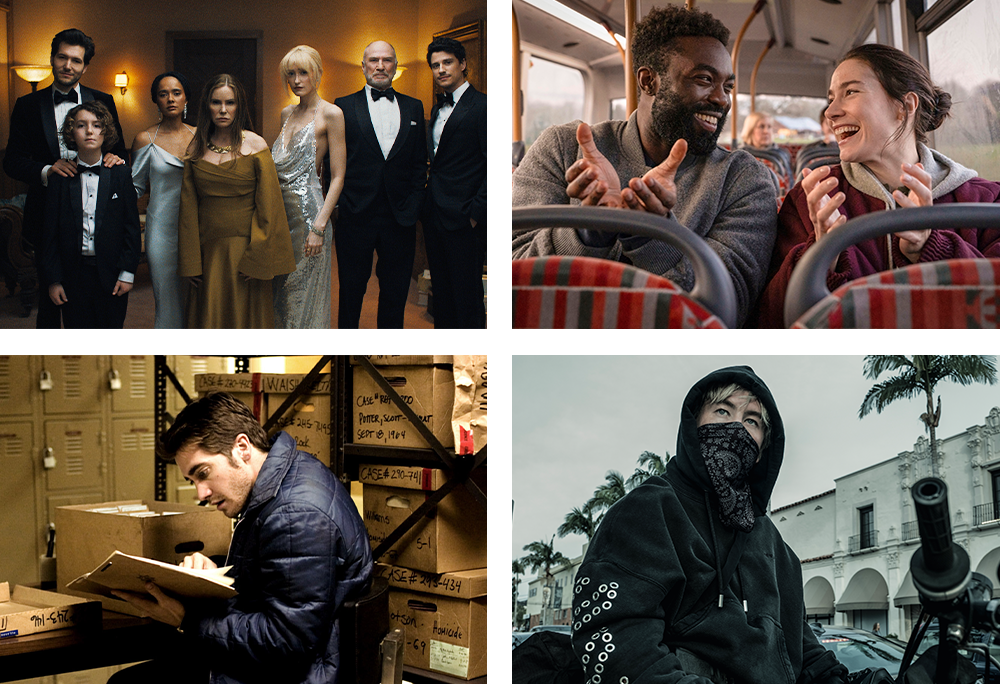
SOMETHING VERY BAD IS GOING TO HAPPEN
Speaking of wedding day trauma... This new horror series starring Camila Morrone and Adam DiMarco is thrilling, twisted and fun.
BBC IPLAYER
BABIES
An excellent drama about a couple (Paapa Essiedu and Siobhán Cullen) going through multiple miscarriages, that also manages to be funny and tender.
HBO MAX
ZODIAC
It's never a bad time to rewatch David Fincher's best movie, a slow, meditative and ultimately open-ended mystery about the infamous Zodiac serial killer in 60s and 70s California.
PRIME VIDEO
CRIME 101
It's not quite Heat, but this LA-set heist drama is good craic all the same. |
|
|
BTS: THE RETURN DIRECTOR
BAO NGUYEN
|
Look, no one is really expecting a documentary about the biggest boy band on earth, born of the K-pop machine, to be super revealing. But BTS: The Return is an interesting document of a band in transition, following them as they prepare to come back from a near four-year hiatus. And there is actually some tension on show. "There's sort of a stigma of K-pop that everything is very manufactured, and everybody's perfect and polished," Nguyen told GQ. "But what I saw coming in for the first few days was the sense of pressure and tension and a lot of questions. And that was, frankly, very surprising for me."
|
|
|
STEVE COOGAN IS OBSESSED WITH... FUN BOYS |
"It's this thing on BBC Three that I had a guest role in. They're like 20-something Irish guys who are just really funny. I like anyone who's doing something fresh and different, I get bored by polished mediocrities." |
|
|
|