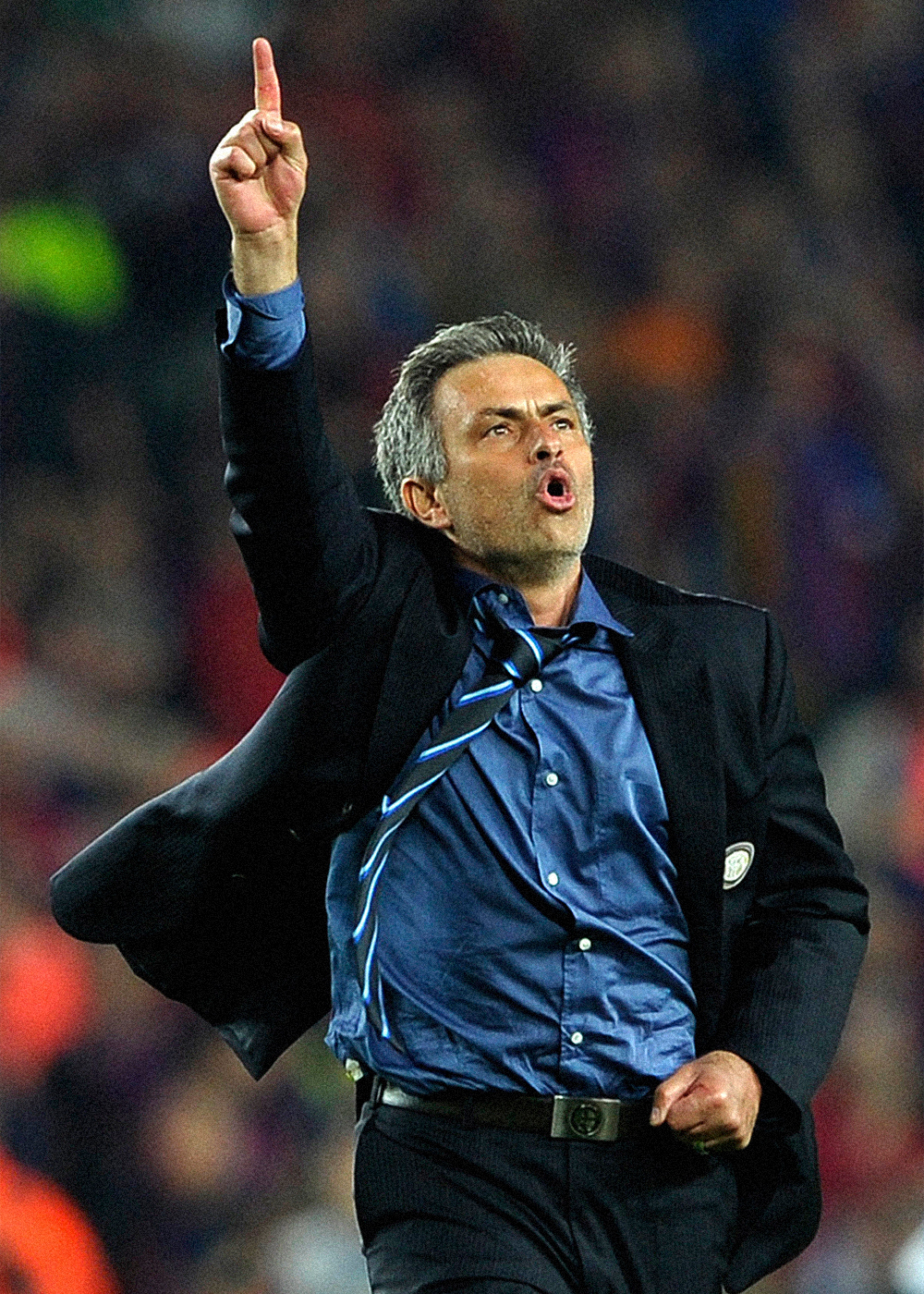
If anyone is living proof of the meme-era adage that life is just a constant cycle of "I'm so cooked" and "we're so back", it's José Mourinho. Despite having just lived through the least successful decade in his career - during which he was fired from Man United, Tottenham, Fenerbahçe and Roma - and failing to win the Portuguese league with Benfica last season, he has recently been appointed manager of Real Madrid, the biggest and most successful club in the world.
How is the Special One's aura still so pungent that he is believed to be the right man to turn a bunch of individual superstars into a world-beating team? Mourinho, the new Netflix documentary that charts his rise (and, to a lesser degree, his fall) does a good job of answering this question. Over the course of 20+ sit-down interviews with Mourinho himself, director Joe Pearlman (behind the recent Robbie Williams and Lewis Capaldi tell-alls, also on Netflix) extracts the definitive portrait of, as he puts it, "an enigmatic and important leader", and also "a genius in manipulation".
He's got the full deck of Mourinho disciples as talking heads, including John Terry, Frank Lampard, Zlatan Ibrahimović, Samuel Eto'o, Marco Materazzi and Javier Zanetti, as well as some agnostics, like Iker Casillas and Sami Khedira. Through these interviews, you begin to understand how Mourinho conjured such brutal devotion in his players through precisely calculated man-management.
Mourinho, quite remarkably, does some opening up of his own, speaking for the first time on some pivotal moments in his personal and professional life, like the death of his father, and the big job no one knew he turned down. Last week, I got on a call with Pearlman to break down some of the documentary's biggest moments - including one revelation that, as a Manchester United fan, had me spinning out for days. Below, we discuss the reason Pep Guardiola didn't get interviewed for the doc, plus Mourinho shouting at the production team, and his exasperation at being asked to speak on his time at Spurs.
|
GQ: Why did you want to make a documentary about Mourinho?
Joe Pearlman: I think that he's just such an incredibly enigmatic and important leader in culture. When I look for these characters that I want to do these documentaries on, I really dig into the character the world sees, and then the person that I think is lying underneath, and whether or not we can get to that person. With José, the ultimate challenge is that everyone knows the Special One, and everyone has a preconceived idea of who he is. But underlying all of that, there's obviously a man there [people know very little about].
Was the documentary always going to come out in August - totally unrelated to Mourinho's Madrid appointment?
Completely unrelated, just an amazing coincidence. Thankfully, we hadn't finished yet; we were still at the end of the edit. So it wasn't hard for us to manoeuvre and get a bit of that in. It's the perfect end to that episode - the full-circle moment of going from Real Madrid and returning there under very similar circumstances.
How did you find Mourinho as an interviewee? There's a cliché that men soften as they enter their 50s and 60s. Do you think he has?
I don't think he particularly has. I just think we were able to get to a point where the mask started to slip. I think this man is a genius in manipulation, in media control, in presentation of an image. He's the best I've ever worked with. So, I think he knew what he thought he was doing, and we as filmmakers had other agendas. I wanted to present to the world the person that I met. And I didn't meet the press-conference José Mourinho. I met someone who had just been fired at Roma, [when] he was in a very vulnerable position. He wanted to talk; he wanted to define his legacy. And I think it was a point also where the world was saying, "Well, what's next for José Mourinho?" And those years - Fenerbahçe and Benfica were the years we spent with him - felt like he was in the wilderness for a long time, while he was also processing his past with us.
How much time did you spend with him?
It was between 20 and 30 days of interviews. Probably about seven, eight hours a day, something like that. And he turned up every day on time, ready to go, with no representation, always.
How did you manage to get him to open up about his personal life? Your voice is in the documentary a few times, poking and prodding him a bit.
Because it's a long conversation, and I'm lucky enough to sit in a chair with someone like José Mourinho for six, seven hours at a time, we get to know each other very well, including dinners and hanging out and all that stuff. And it gets to a point where he knows I'm going to have to start pushing, and you respond how you respond. And as you can see from the [third] episode, there is a very long pause where he wants to fucking kill me. It felt like an honour, to be honest, because if you make a documentary with someone like that, who's both volatile and love-bombing and all the things, you have to experience it all to give the viewer the truest version of the character. And we did.
I'm assuming that he had no editorial oversight?
No, no. I think there's a bit of a misconception a lot of the time with the shows that we make. We don't give over any editorial control. The person has a thing called factual approval, which means that we need to make sure that our facts are right. That can't be opinion; that needs to be fact. So beyond that, it's entirely up to us what we put in the show.
Why didn't you do a more thorough look at the last 10 years - like the ill-fated stints at Spurs, Manchester United and Benfica?
You have to make a decision very early on what the narrative is. And I think we wanted to structure it as the budding hero who suddenly arrives on the scene and redefines football, and then finish with, is he still relevant any more? Or does the world still view him the same way that they used to view him?
I think Tottenham is a difficult one because there has been [Amazon documentary] All or Nothing. So ultimately the best footage isn't accessible to a Netflix audience. So that's the reality of that. And also, when we spoke to him about Tottenham, when I said, "OK, let's talk about Tottenham," he just went "Ugh."
When we looked at Man United, what really defined that period for the man was his father passing away. And it's very clear that during that Man United tenure, there's a moment where there's a sadness, there's a change in him. I think he really struggled with that in that period. Then Fenerbahçe, there's nothing to say. Benfica, not a huge amount to say. Real Madrid, there'll be a lot to say. I think it's more satisfying for the success in those early years to really fall in love with him and understand why those later years matter.
The most controversial moment in Mourinho's career so far happened last year, when, in an interview following a match between Real Madrid and his Benfica side, he appeared to cast doubt over Vinícius Jr's claim that a Benfica player racially abused him on the pitch. Was that something that you wanted to try and get into with him?
Not particularly. I don't know the specifics around what happened, and also what the resulting ruling of everything was, but it didn't feel like something that we wanted to get to him with at the time. I don't know. It was not something we thought that we should look at.
He seems to me like someone who doesn't ruminate on the past in a way that a lot of people would. And yet he's also decided to do this. Do you get a sense that he's trying to process what has changed and what to change next to try and get back to winning ways?
No. I think that he is one of the most confident-in-himself people I've ever met in my life. His obsession with football overrides anything else. And I think as a result of that obsession, he also believes and has proven for a long time that he is the very best at this. So I don't think he's trying to adapt. He says it in the show; he has no regrets. John Terry spoke to him about trying to adapt the second time he went to Chelsea, and he refused to. And the casualties of that are [Kevin] De Bruyne and Mo Salah, two of the best players who have played in England. So he doesn't care about that, because that's not what matters. He needs full control. He needs you to be all in on him. And if you're not, it's going to fall to pieces.
The players all talk about how devoted they were to him. But do you have an insight into how he inspired that? Because that's something that I'm still trying to understand completely.
I think it's individual. I think he's an incredibly smart man in management. I think he finds the thing inside you that he needs to rile up, whatever that is. Whether it's going to Frank Lampard in the shower and saying, "You're the greatest player in the world," and Frank truly believing that in that moment and going on to be one of the best players in the world. [Or] John Terry: giving him the confidence to be the captain. Those moments make a huge difference. I think the man is a genius at understanding characters, which is why it's so fascinating to me that in episode three, when I ask him why he's not curious about people, he says no. He's deeply curious about people. Of course he is.
Did anyone refuse to talk to you?
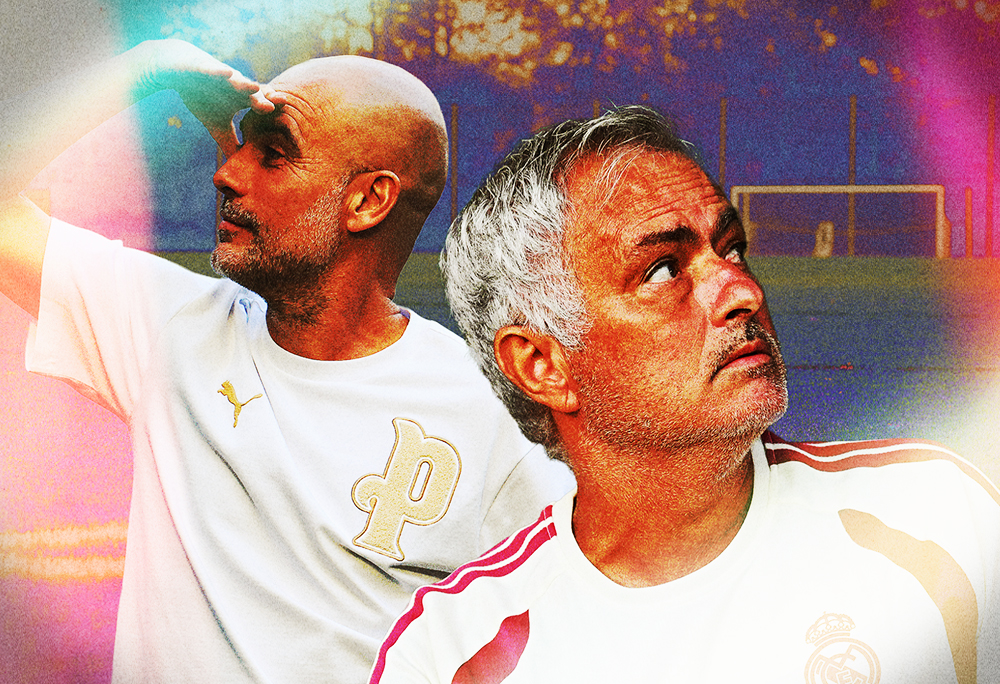
I would've loved Pep Guardiola to have been in this. And we approached him, and he actually said that he would do it if José asked him. And you can imagine how that went down.
That's a beautiful encapsulation of their whole vibe.
It says everything about both of them.
Did anything in particular surprise you about Mourinho?
I don't think that he ever surprised me. But there were moments where he shouted at us, and didn't enjoy interviews that we did. "Why are we talking about this bullshit?" That all happened. I think you were more just waiting for those moments to come, and [wondering] what would be the triggers, because who the hell knows what's going to trigger him?
The revelation that Mourinho was offered the United job after Sir Alex Ferguson retired really shook me. Do you have a theory on why he turned it down?
I think the emotional pull to Chelsea was a big part of it. Chelsea represented something for him and his family. It was home. After Real Madrid, the experience was exhausting, traumatic, all of those things. And I think the search for, not an easier job, but something that felt comfortable, something that felt less of a challenge, less people hating on him, a place they would just fully accept him - I think that that became a lot more appealing.
I mean, to be fair, taking that job with that ageing squad after Alex Ferguson, it was always going to be a poisoned chalice, wasn't it?
Totally. And you can't do Inter Milan with that squad. You've got to start again. I think he would have just looked at it and thought, "Why?"
GQ stories you might have missed:
Streets are saying that The End of Oak Street is the summer's surprise banger
Jack Lowden would kill it as Bond
Here's what we know about Cry to Heaven, Tom Ford's next movie |
|
|
HBO MAX
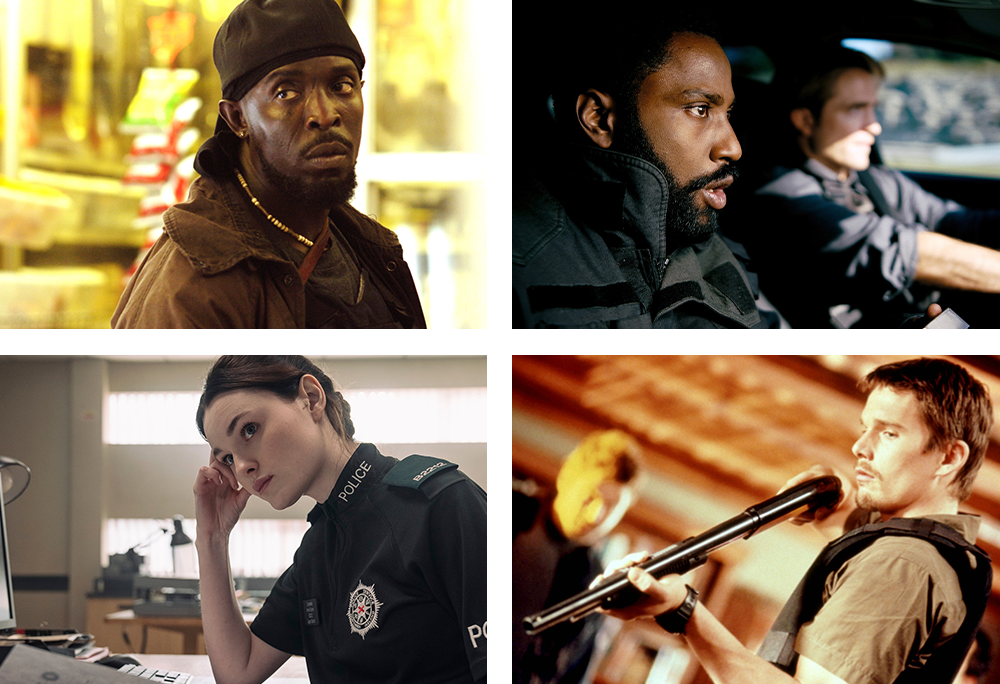
THE WIRE
The best thing about an HBO Max subscription? Returning to the greatest TV shows ever made, like this genius drama that explores how the drug trade corrupts every institution in Baltimore, Maryland.
PRIME VIDEO
TENET
While we're all on the Christopher Nolan train... This "time goes backwards" thriller is definitely better on a rewatch.
BBC IPLAYER
BLUE LIGHTS
It's a good time to catch up on this excellent series about the police force in Belfast, ahead of season four arriving in the autumn.
NETFLIX
TRAINING DAY
A calamitous ride-along for a rookie narcotics officer (Ethan Hawke), with a mad detective played by Denzel Washington. It's incredibly thrilling. |
|
|
|