|


Welcome to the 205th edition of The Week in Polls (TWIP), which takes a look at a pioneering use of opinion polling to influence press regulation.
This is followed by a summary of the latest national voting intentions polls, seat projections from MRPs, and the most recent party leader ratings.
Subscribers who pay for the full edition can also read ten insights from the latest polling and analysis, including:
What a new poll from Gorton and Denton tells us about the Parliamentary by-election result there;
How Channel 4 News rivals TikTok for news reach on the conflict in Iran; and
How focusing people’s attention on Zack Polanski’s past may damage the Greens.
If you are not yet a paid subscriber, you can read all ten by starting a free trial now:
For more polling news as it comes in during the week, you can also follow The Week in Polls on Bluesky.
But before we get to this week’s new stories, an update on last week’s story covering Nigel Farage’s complaints about YouGov. YouGov has now agreed to start including in its published data tables some extra information, which debuted this week. The extra information means we now get to see both voting intention questions they ask: a general question and then one that focuses people’s attention on how they would vote in their own constituency.
This is a welcome piece of extra transparency, though as Nigel Farage is claiming this as a victory, it is worth also emphasising that publishing this extra information makes no change to YouGov’s headline voting intention figures.
The adjustments that were the subject of Nigel Farage’s ire will continue unchanged, and The Times has corrected a headline which wrongly stated YouGov was going to “change poll results”.
A quick update too on one of the editions from November last year, which highlighted how Reform was slipping in the polls. With that story now hitting the mainstream media,¹ readers can pat themselves on the back for having been four months ahead of the media.
One other preliminary: I have recently switched to using the online Keeper password manager, which makes it easy to create secure, unique passwords for all your logins, while also making them easy to use. You can get a free trial and then 30% off your first year with this affiliate link.
And with that, on with the show.
Opinion polling used to persuade press regulator
 |
A complaint to the press regulator about the factual accuracy of a Daily Mail story is not that unusual an occurrence. But the recently resolved complaint over a story on dailymail.co.uk involved an unusual, and very welcome, use of opinion polling.
The story compared the cost of petrol and electric cars:
Many drivers have been put off by the price of electric cars, which average around £50,000, more than double the cost of a petrol car at around £22,000, according to NimbleFins.
However, those figures were not a like-for-like comparison, as the Energy and Climate Intelligence Unit (ECIU) pointed out in their complaint. The £50,000 figure on the NimbleFins website was actually £46,000 and was an average for all types of electric cars, from entry-level Dacias all the way up to luxurious Rolls-Royces. But the £22,000 petrol-engined figure was an average for a “small car”, excluding the costs of, for example, the petrol-engined equivalents of those Rolls-Royces.
The complaint also disputed the accuracy of those figures, but where the polling came in was over whether the story misled people into thinking that there was a like-for-like comparison being made between the £50,000 and £22,000 figures.
As Byline Times reports:
IPSO originally backed the Daily Mail in claiming that readers would not assume that the £22,000 figure referred to the average price of a petrol car…
When IPSO initially rejected the complaint and refused to investigate, it stated: “We observed that the article did not say the average price of a petrol car was £22,000. Rather, it made clear that “the cost of a petrol car [was] at around £22,000” (emphasis added).
“We did not consider readers would be misled into believing £22,000 was the average petrol car price… Taking all these into account, we did not consider the article was misleading in the way you suggested.”
So ECIU got YouGov to run a poll:
According to their survey, almost two-thirds of readers were misled by the article into believing the paper was referring to the average petrol car price, compared to just 16% who did not interpret it in this way.
After ECIU showed IPSO this polling, they reversed their decision to reject the original complaint.
As the IPSO complaint ruling says:
On review, the Complaints Committee identified a possible breach of the Editors’ Code and re-opened the complaint.
That triggered an extensive round of back-and-forth over the wording of corrections to the story, resulting in the story being corrected (see paragraphs 15-17) and the complaint closed.
I have not come across an opinion poll being used in this way before to test whether the wording in a newspaper misleads the public. Given the success in this case, I suspect it won’t be the last time polls are used this way - and the incident once again demonstrates the democratising impact of properly conducted polls, giving an effective voice to the public.
The regulators had said that no, the public weren’t confused by the story, while the poll gave the public the chance to say, yes, we were confused by the story.
That’s a good use of polling.
Latest edition of Political Fictions
The latest episode of my podcast Political Fictions is about governments struggling with small majorities in the 1970s:
Mark and Cory talk about James Graham’s play This House. The hit play, available to stream from the National Theatre, is about party whips trying to prop up a government without a secure House of Commons majority in the 1970s. Mark and Cory marvel at the kipper ties and rotary dial phones, discuss the importance of treating your political opponents with respect, and ponder whether works of art would be improved if they spent more time celebrating the achievements of Labour governments.
Regular listeners will know we have a ‘Phil Woolas award’ segment in the show. Our sincere condolences therefore to his friends and family on the news that broke just before publishing this episode of his death from cancer at 66.
|
This House (#3) Cory Hazlehurst / Mark Pack |


You can also find this episode on Spotify, Apple Podcasts, YouTube and all the usual podcast places.
Elsewhere from me…
The government’s new strategic guidance for Ofcom has very little to say about improving the performance of parcel delivery firms. Yet mention the topic to most people and they will have a tale of woe, a ‘sorry you were out’ card left when in fact they were in all day, a parcel thrown over a fence, or their local Facebook group being home to regular messages as people ask, ‘the delivery company claims they left a parcel with me but that’s not my doorstep in the photo; does anyone recognise it?’
Which is why I have put down a motion in Parliament:

If you spot a factual error…
Borrowing an idea from Stuart Ritchie and others, if you spot a factual error in an edition of this newsletter, I will give you a free 12-month subscription to the paid-for version (or an extra 12 months on your existing one). Factual errors qualify rather than grammatical errors or disagreements over interpretation, with my decision being final. Messages about both of those are always very welcome, though.
Voting intentions and leadership ratings
Here are the latest voting intention polls from different pollsters, with the Reform vote share continuing to slip on average and the Green vote, having been boosted by their Parliamentary by-election win, now plateauing. Note too how Find Out Now is, for the moment at least, no longer an outlier on the upside for Reform.
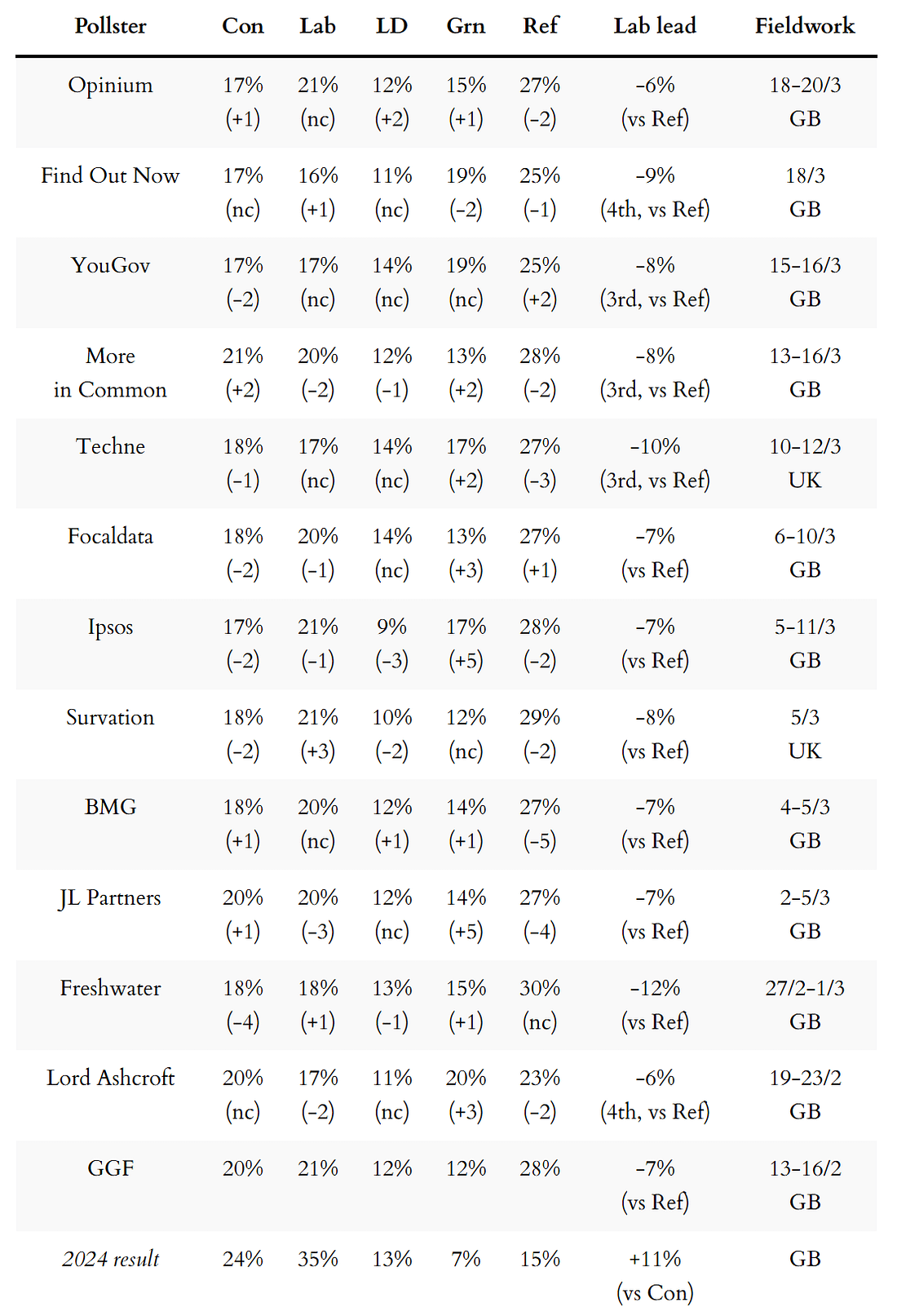 |
The table is also online here, along with explanations about what is included. It is updated regularly through the week with new polls.
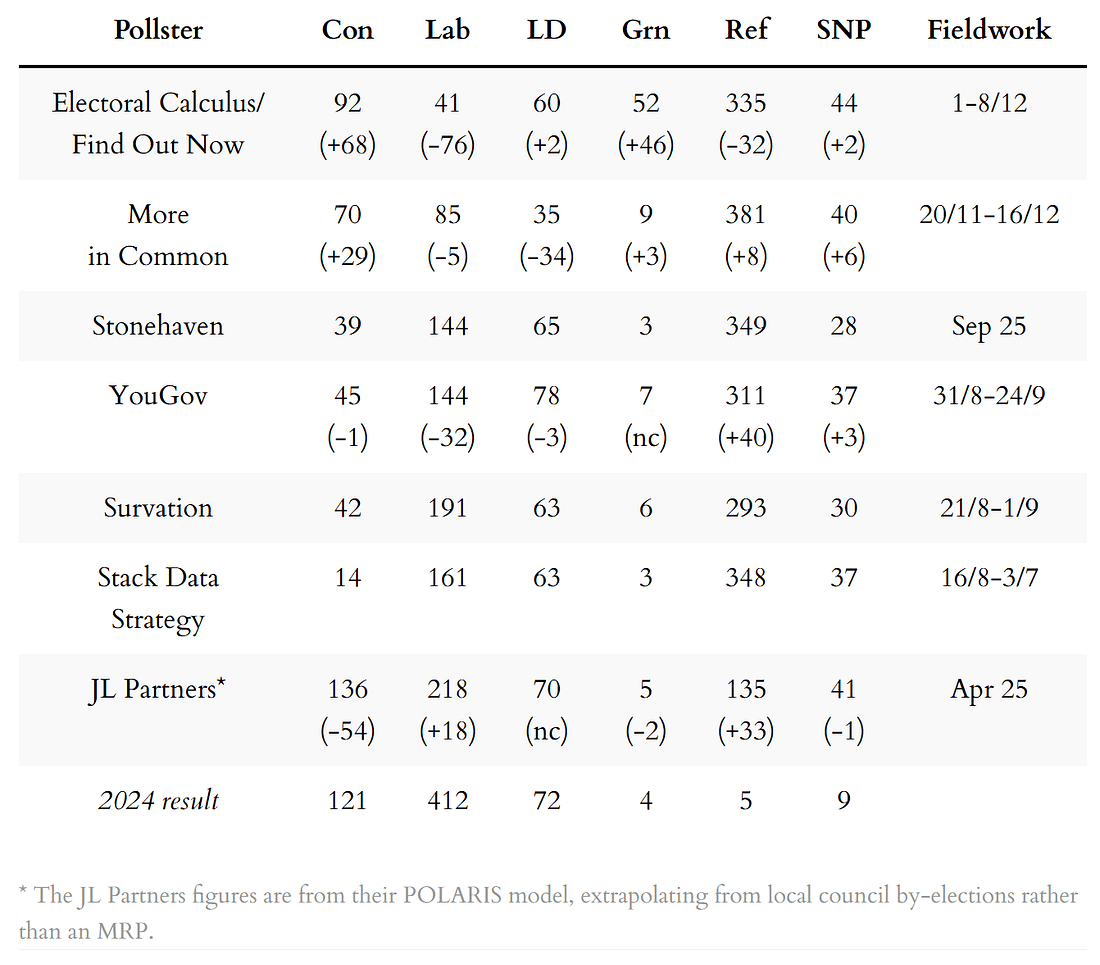
Next, the latest seat projections from MRPs and similar models, also sorted by fieldwork dates. As these are infrequent, note how old some of the ‘latest’ figures are.
 |
Finally, a summary of the latest leadership ratings, sorted by pollster name. Keir Starmer’s bump following the start of the conflict with Iran has, with some fluctuations, continued. Meanwhile, the jury’s still out on whether Zack Polanski’s net ratings are now declining. That data is all a bit noisy.
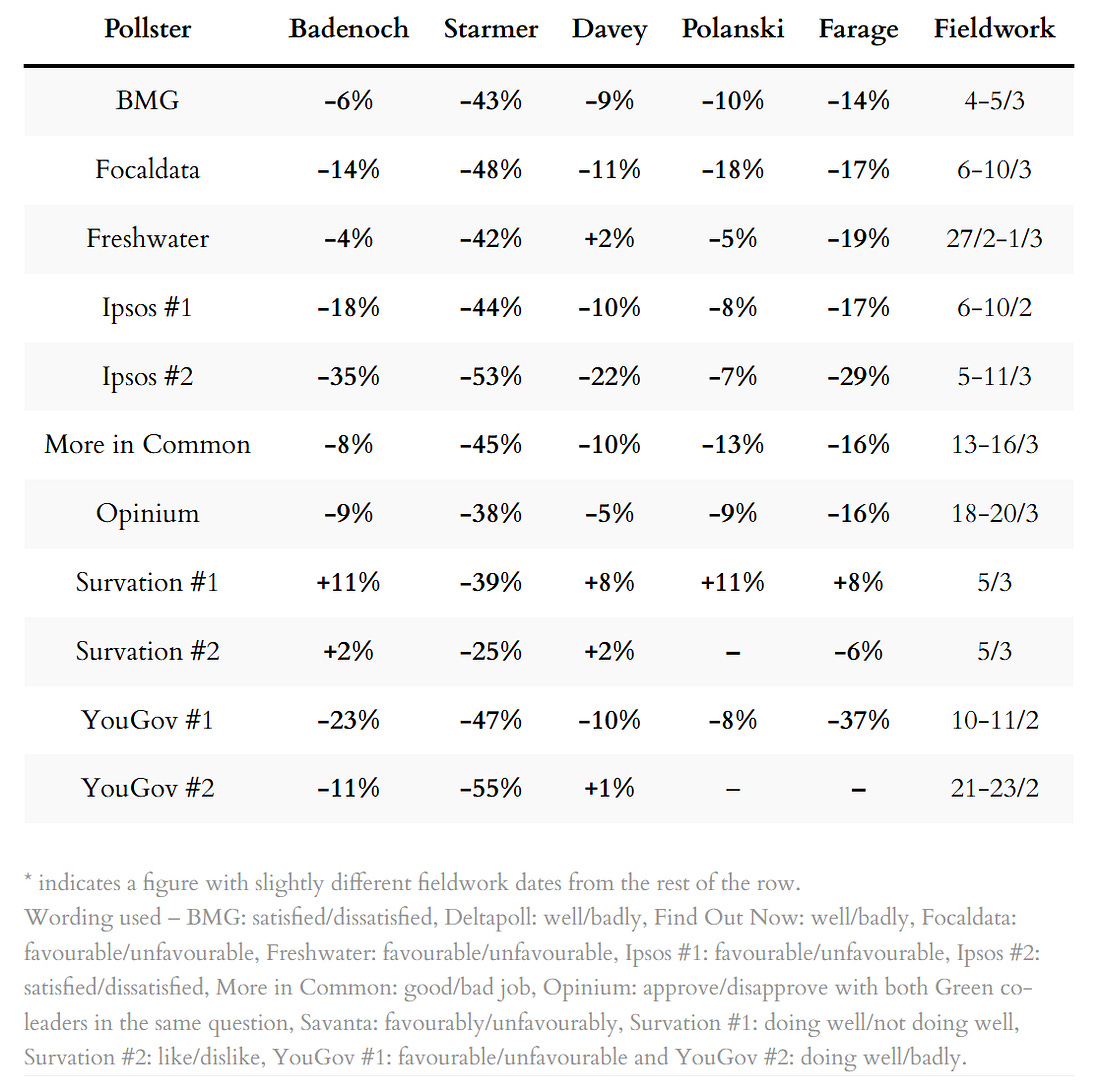 |
The table is also online here with additional details and is updated regularly through the week as new data comes out.
For the historic figures for both voting intention and leader approval, including Parliamentary by-election polls, see PollBase.
Catch up on the previous two editions
 |
|
 |
|
My privacy policy and other legal information are available here. Links to purchase books or other items are usually affiliate links which pay a commission for each sale.
Quotes from social media messages are occasionally lightly edited for punctuation and clarity.
If you are subscribed to other email lists of mine, please note that unsubscribing from this one will not automatically remove you from the others. If you wish to be removed from all my lists, simply reply to this email to let me know.
Is public opinion turning on the NHS?, and 9 other polling insights you shouldn’t miss
The following 10 findings from the most recent polls and analysis are only for subscribers who pay for the full edition, but you can sign up for a free trial to read them straight away.
New data from YouGov reinforces recent trends in public opinion on the NHS. ...

Continue reading this post for free in the Substack app
| ||||||||||

