|


Welcome to the 175th edition of The Week in Polls (TWIP), which returns to the polling on the as-yet-unlaunched new left-wing party featuring Jeremy Corbyn and Zarah Sultana.
Next comes a summary of the latest national voting intention polls, seat numbers from the latest MRPs and the latest party leader ratings.
Subscribers who pay for the full edition can also read 10 insights from the latest polling and analysis. These include:
Whether or not people really think too many asylum seekers are being housed in their area;
What Brits think of Donald Trump, JD Vance and Vladimir Putin; and
The surprising extent of the gender splits on the question of whether James Bond could be female.
If you are not yet a paying subscriber, you can read all the answers by starting a free trial now:
This week my eyebrows were raised by the claim in The London Economic that, “support for Reform among young Brits plummets”. However, as someone from YouGov - the pollster cited in the piece - pointed out:
Another in the classic series 'when there's an issue with poll coverage, the problem is nearly always the coverage not the polling'. If there was reason to believe the change was statistically significant and not the result of margins of error and sampling variance, we'd have publicised it.
My latest review of a book about the 2024 general election is also out, hopefully to fewer raised eyebrows:

And with that, on with the show.
Want to know more about political polling? Get my book - Polling UnPacked: the history, uses and abuses of political opinion polling.
What would a new left-wing party mean for the existing parties?
As I have covered before, polling about a putative new political party is a poor indicator of how that party will then do. So we should not read too much into recent polls that put a planned new left-wing party in double figures.
For example, as Owen Winter highlights, ChangeUK started with similar poll ratings to those the new Jeremy Corbyn/Zarah Sultana party has secured in some polls. And as Anthony Wells points out with another of the numerous examples available: “In 2012 when the NHS Action Party launched Lord Ashcroft asked how people would vote if they stood. They got 18%. In reality, they stood in 12 seats and got an average of 3%.”
To add to the buckets of cold water, Focaldata’s latest poll puts such a new party at 4%. (The pollster has a good explanation of the methodological choices involved in polling about a party that has not yet been launched, and so why there is the range from 4% in their poll up to 15% in another poll.)
But… while such early polls are not good predictors about the level of support a new party will receive, they can tell us something about the sort of support it might receive.
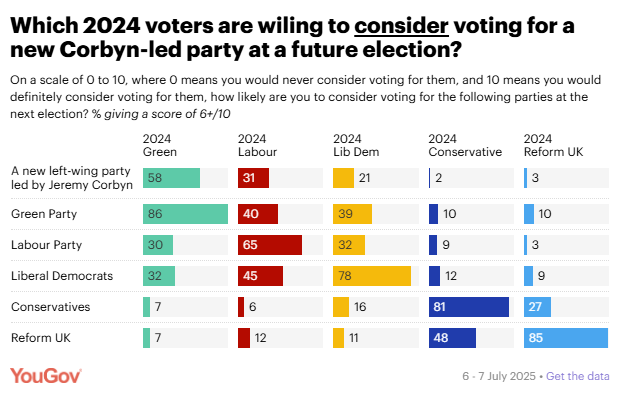
We know from YouGov that it is Green Party supporters who are most likely to consider voting for a new left-wing party:
 |
With slightly different question wording, Ipsos gets a similar picture:
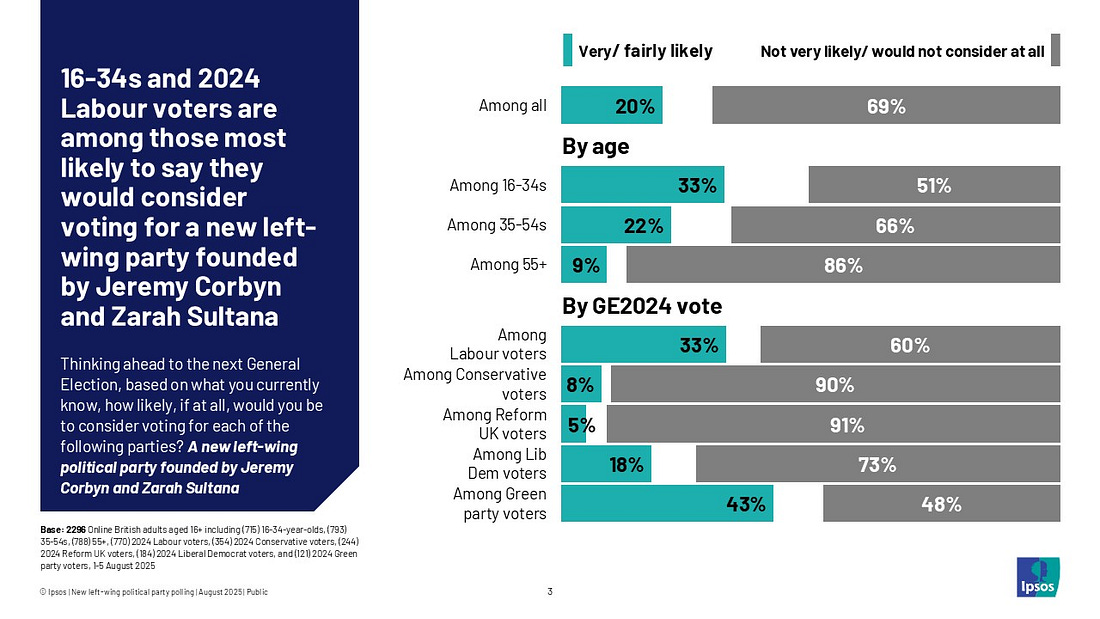 |
It is no great surprise how few Conservative voters look attracted to the new party. The low figures for Reform voters, and the relatively low figures for Lib Dem voters, are however worth reflecting on.
Although part of Reform’s appeal is about tapping into a general discontent with politics, something that Jeremy Corbyn too managed in 2017, very few Reform voters are likely to peel away.
The figures for Lib Dem voters are also notable, as usually the party’s support is softer than that for Labour or the Conservatives, and often open to talk of new parties. That familiar historical picture has not repeated this time.
Whether the potential appeal to Green voters is good or bad news for the Green Party is wrapped up in the debate over the party’s strategy that is part of its current leadership election.
There is a common pool of voters that a left-pitched party could appeal to. As Ipsos also finds:
The public is split on a potential electoral alliance between the new left-wing party and the Green Party, with 29% of Britons supporting such a pact and 28% opposing it. However, support is strong among key demographics, including 16-34s (46%), 2024 Labour voters (47%), and especially among those who would consider voting for the Green Party (60%) or the new left-wing party (74%).
Whether all this means the Greens should try to dominate that common pool, cooperate with a new party to share the pool, or concentrate on a broader pitch to other voters the polls cannot decide.
But they do tell us that of the existing parties it is likely to be the Green Party facing the biggest questions if a new left party launches successfully.
If you spot an error…
Borrowing an idea from Stuart Ritchie and others, if you spot a factual error in an edition of this newsletter, I will give you 12 months free subscription to the paid-for version of this newsletter (or an extra 12 months on your existing one). Factual rather than grammatical errors, and factual errors rather than disagreements over interpretation. Though messages about both of those are always very welcome.
Voting intentions and leadership ratings
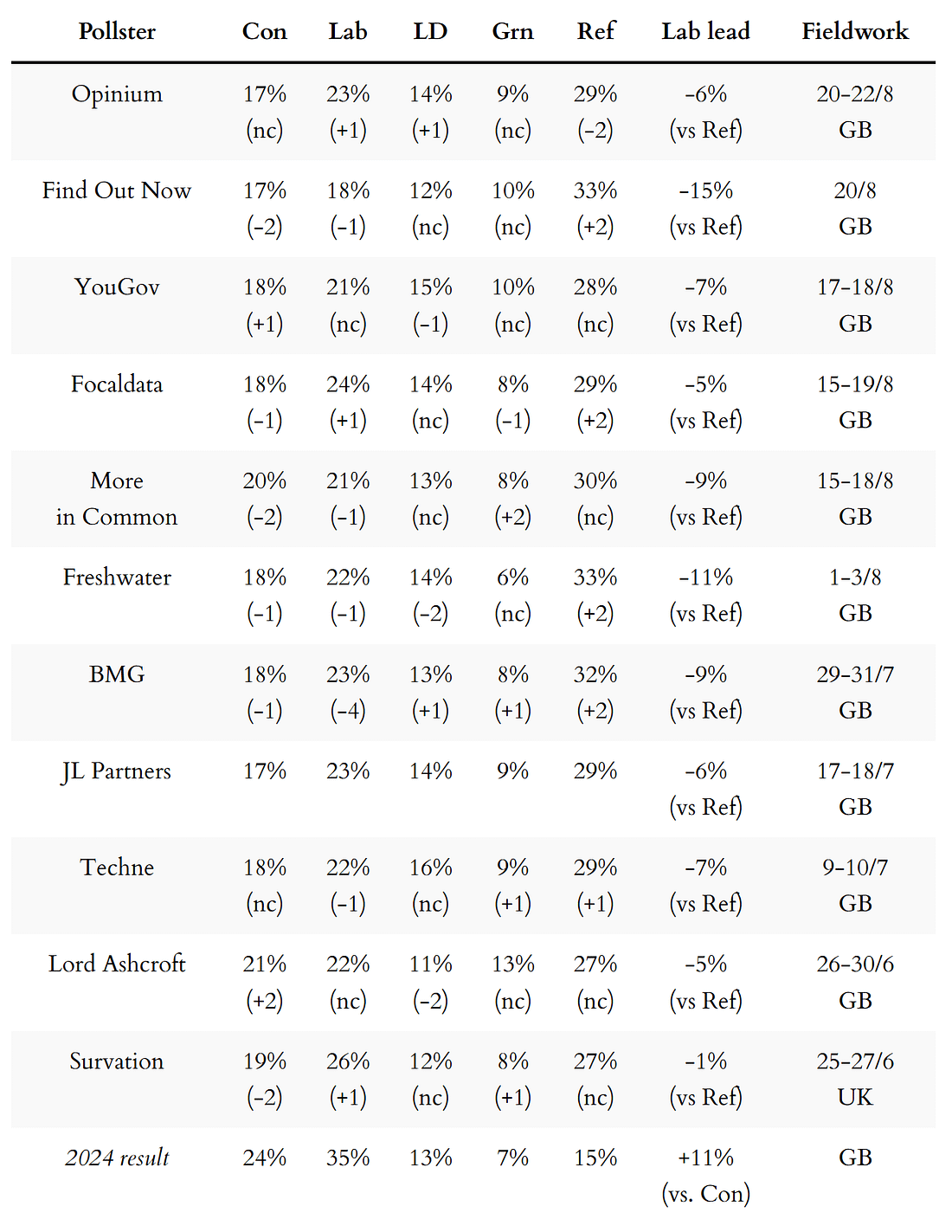
Here are the latest national voting intention figures from each of the pollsters currently active.
Last week I wrote, “Possibly of note are the two polls showing a sharp rise in the Conservative rating. That is not reflected in data from other pollsters, and it is not obvious what would have caused it. Hence it is likely that this is noise rather than a real trend.” We now have more data and as you can see, that does indeed appear to have been just a random blip.
Meanwhile, the Lib Dem 14% score with Opinium is the party’s highest with that pollster since the party’s Brexit peak before the 2019 general election. Again, let’s see what more data brings.
 |
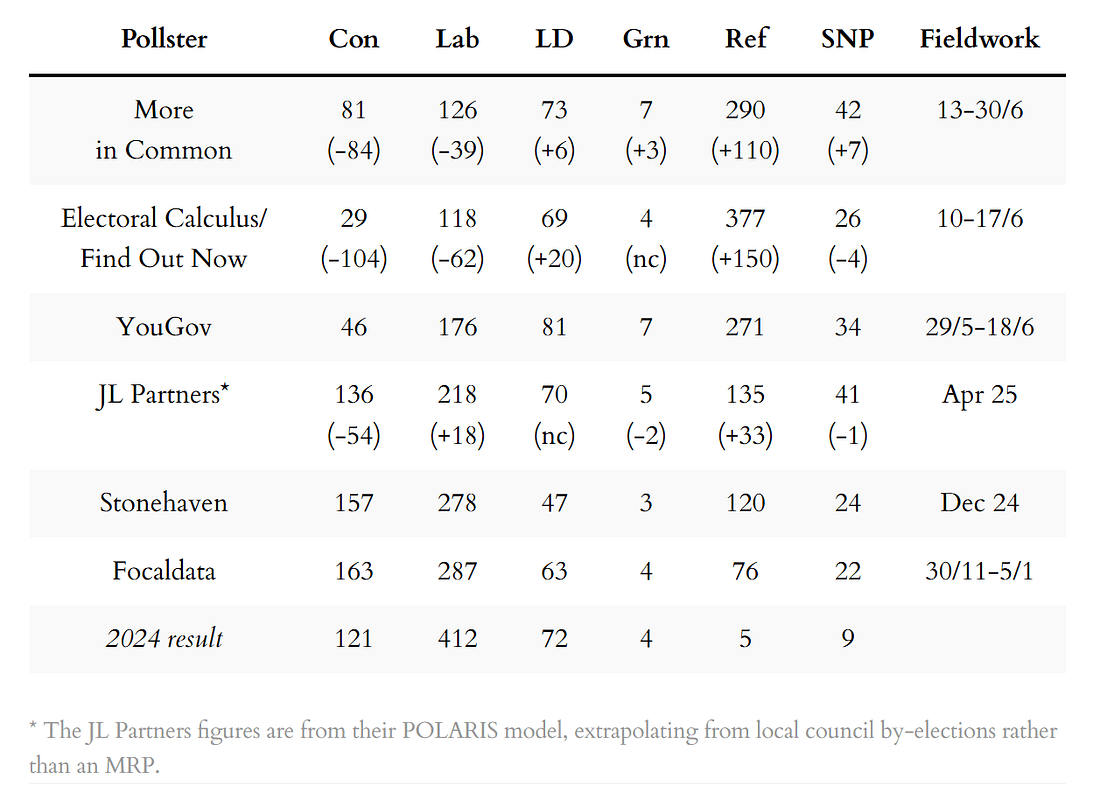
Next, the latest seat projections from MRP models and similar, also sorted by fieldwork dates. As these are infrequent, note how old the ‘latest’ data is.
 |
Finally, a summary of the latest leadership ratings, sorted by pollster name:
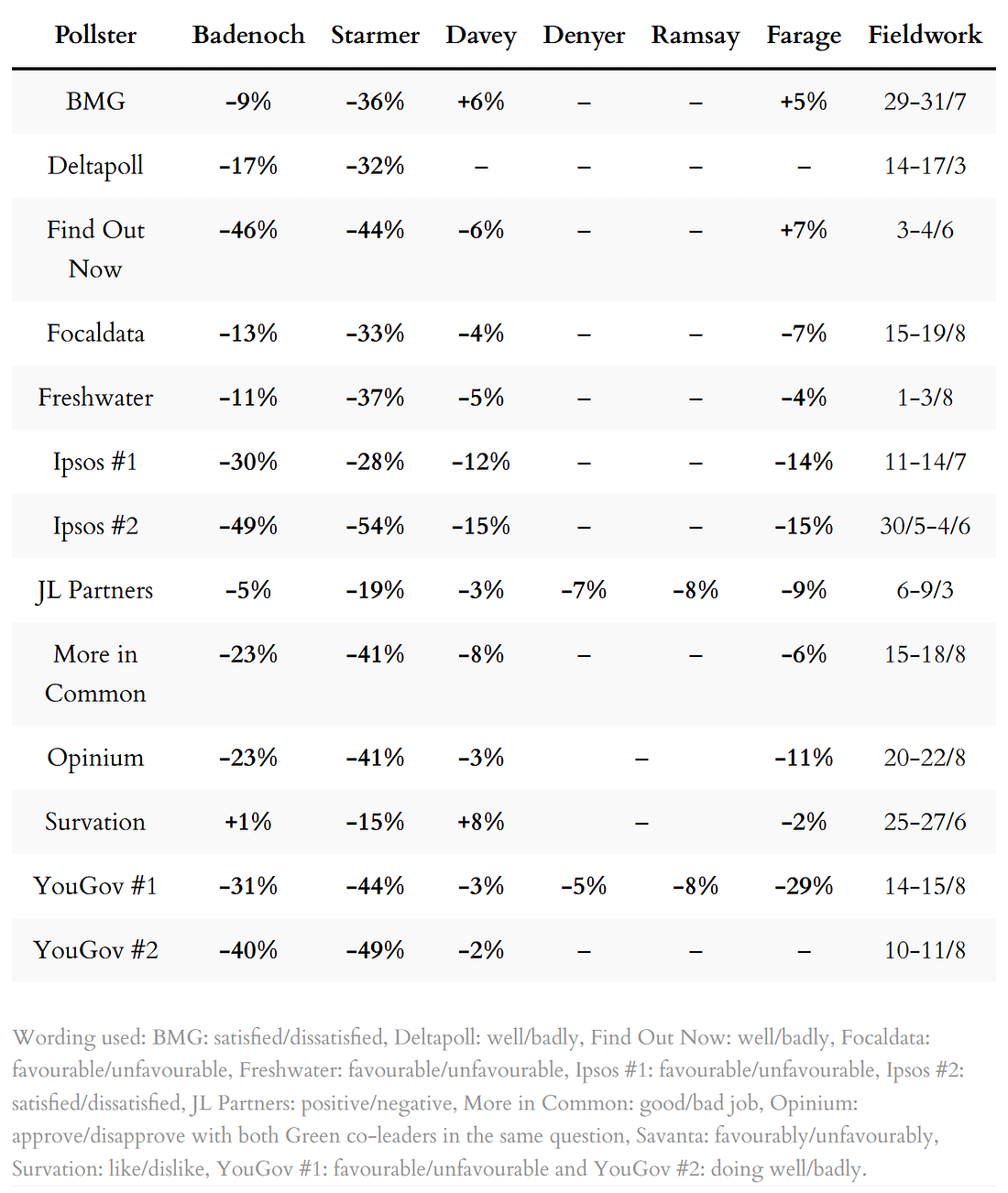 |
For more details, and updates during the week as each new poll comes out, see my regularly updated tables here and follow The Week in Polls on Bluesky.
For the historic figures, including Parliamentary by-election polls, see PollBase.
Catch up: the previous two editions
 |
|
 |
|
My privacy policy and other legal information are available here. Links to purchase books online are usually affiliate links which pay a commission for each sale. For content from YouGov the copyright information is: “YouGov Plc, 2018, © All rights reserved”.¹
Quotes from social media messages are occasionally lightly edited for punctuation and clarity.
If you are subscribed to other email lists of mine, please note that unsubscribing from this one won’t automatically remove you from the others. If you wish to be removed from all lists, simply reply to this email to let me know.
Under a third think their area houses too many asylum seekers, and other polling news
The following 10 findings from the most recent polls and analysis are only for subscribers who pay for the full edition, but you can sign up for a free trial to read them straight away.
Best for Britain has commissioned polling digging into who votes for Reform:...

Continue reading this post for free in the Substack app
| ||||||||||

