|


Welcome to the 180th edition of The Week in Polls (TWIP), which plunges into one of those favourite conference-time speculations: what if a party changed its leader? I’m bringing evidence to the party, courtesy of polling about Andy Burnham.
Next week I will take a look at another of the conference-time polling topics: what the polls say about the Liberal Democrats. But for this week, it’s Labour.
The Burnham polling analysis is followed by a summary of the latest national voting intention polls, seat projections from MRPs and the most recent party leader ratings.
Subscribers who pay for the full edition can also read ten insights from the latest polling and analysis. These include:
What the polls say about Reform’s immigration policy;
Early polling on Labour’s ID cards announcement; and
Whether university students think their courses are value for money.
If you are not yet a paying subscriber, you can read all the answers by starting a free trial now:
This weekend’s raised eyebrows came courtesy of Pew Research, a high-quality pollster in the US, and its finding that 1% of self-declared atheists believe that “Jesus will return to Earth”. (Given the weirdness that usually resides in the small-number answers, perhaps it’s impressive that it is only 1%.)
And with that, on with the show.
Want to know more about political polling? Get my book - Polling UnPacked: the history, uses and abuses of political opinion polling.
Andy Burnham: what the polls say
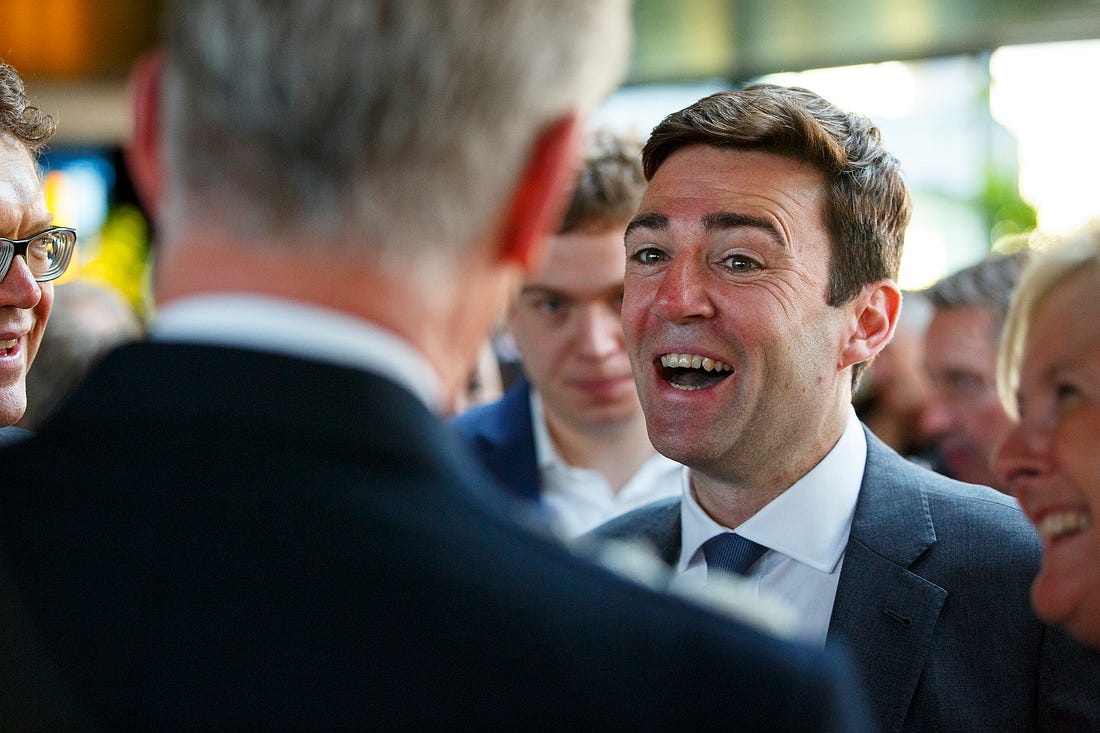
With Keir Starmer’s leadership under pressure, Labour members (according to Survation for LabourList) wanting a change of leadership and Andy Burnham honestly answering a journalist’s question and/or plotting (delete to taste), pollsters have been busy putting his name into their questions.
His personal ratings come out pretty well, not only compared with Starmer but also with other politicians too. Take this from Ipsos, as covered by the New Statesman:
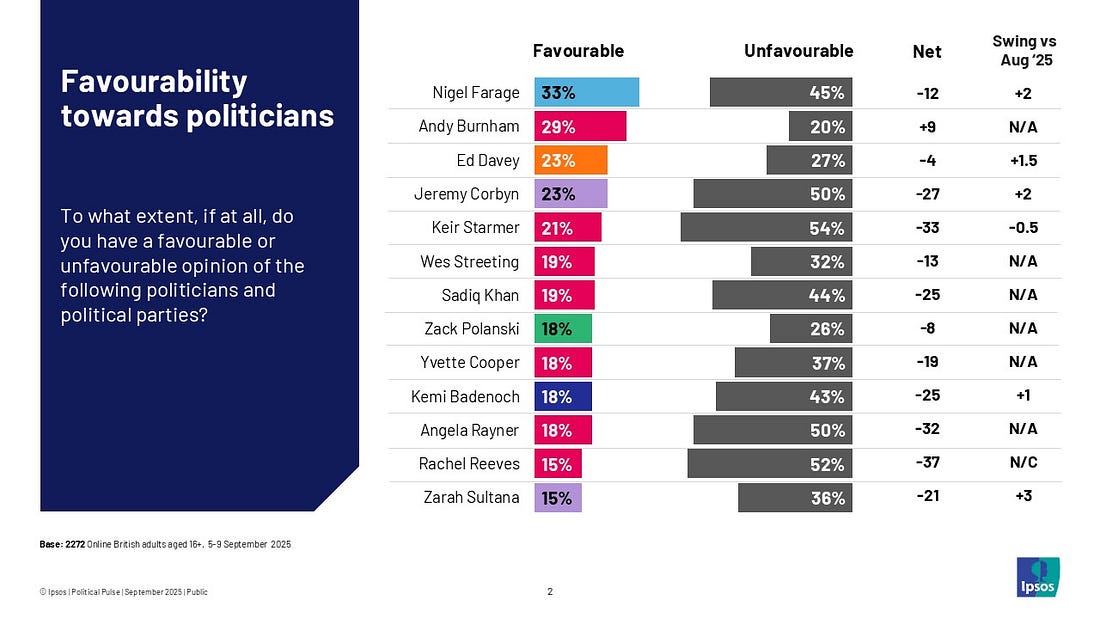 |
Note that Burnham’s high appearance in that table is not simply due to more people not having a view about him. The don’t knows and similar sundries for him add up to almost exactly the same for him as for Zarah Sultana, down at the bottom of the list. And if the list was sorted the way I usually prefer, by net ratings, he would be out on top.
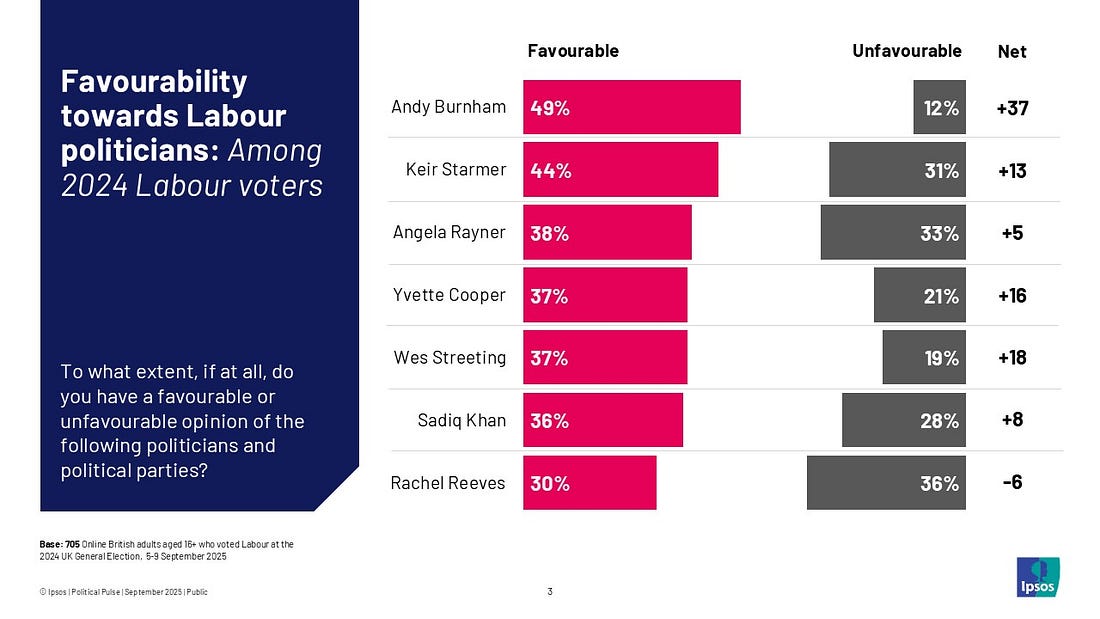
It is a similar picture with 2024 Labour voters:
 |
It is also a similar picture with Opinium, who have Starmer on net -40 approval rating and Burnham on +10. The other two in the top three are again Davey (+3) and Farage (-5).
Meanwhile, Savanta polling for The House has people saying by 28%-14% that Burnham would be a better PM than Starmer. This is more than just a wish for a new name regardless, as Ed Miliband, Angela Rayner and Wes Streeting all come out worse off than Starmer in similar questions:
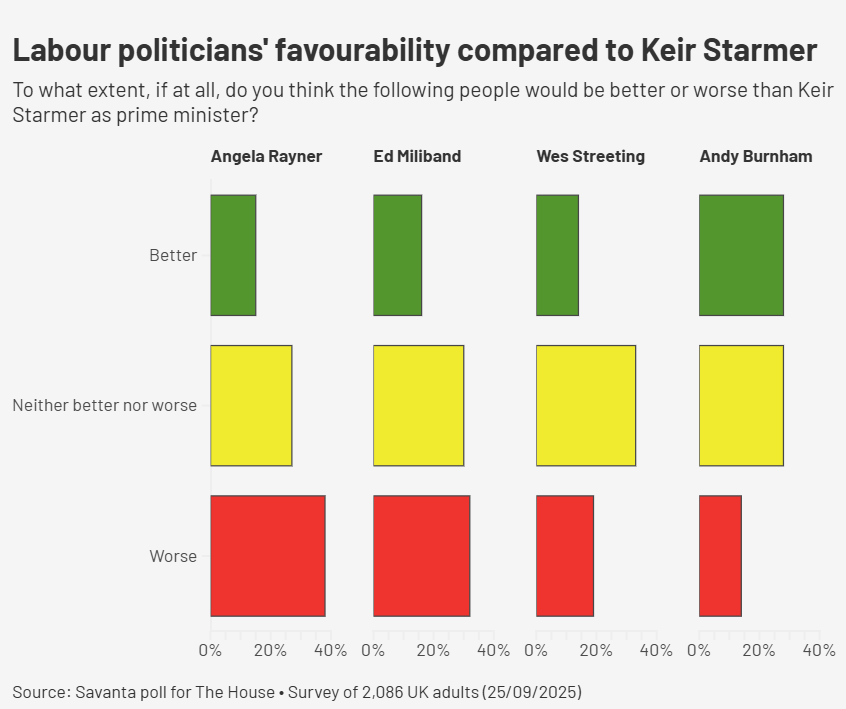 |
Burnham clearly has a polling edge, though it’s worth noting that 28% thinking he would be better is a modest figure given the depth of Starmer’s unpopularity:
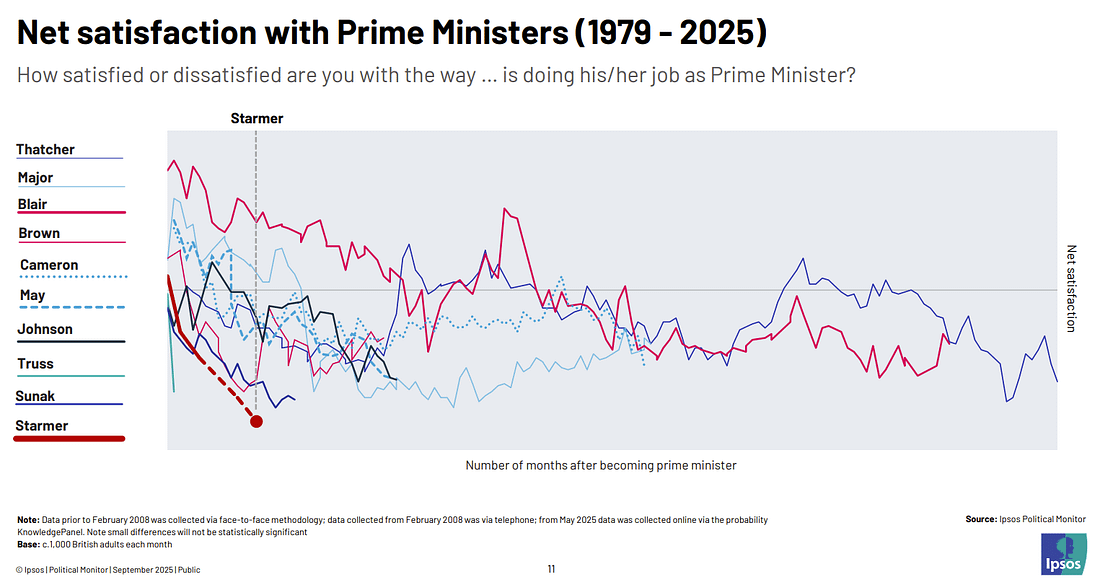 |
We also have some hypothetical (and oddly pixelated, sorry) polling from More in Common, reported in the New Statesman:
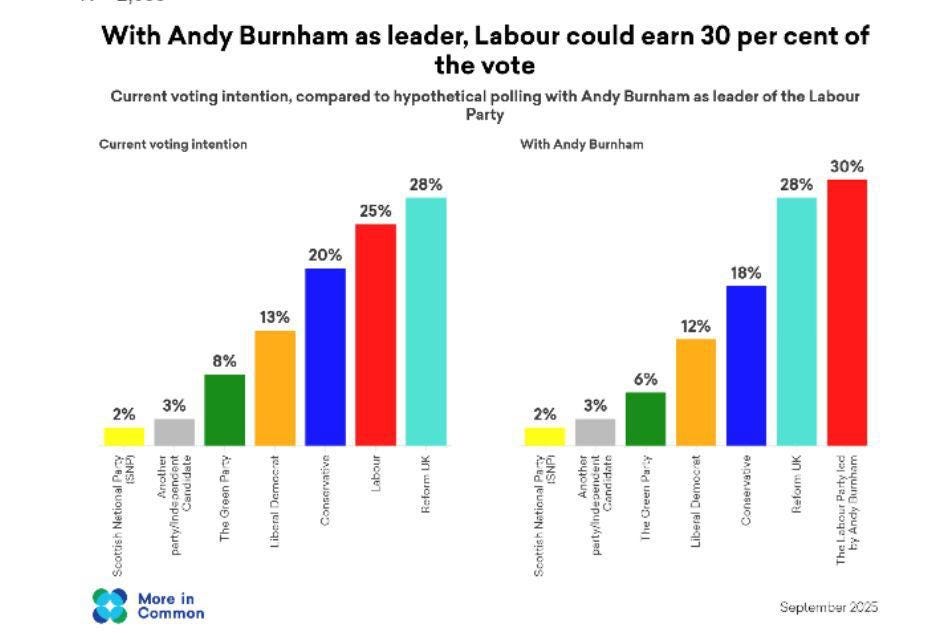 |
This sort of polling has a… mixed predictive record so I would not read too much into it.¹
But I think two things are fair to conclude from all this polling.
First, in Andy Burnham Labour has a national figure who clearly polls better than Keir Starmer. (That’s in contrast to, say, the Lib Dems in the coalition years when one reason a plot to out Nick Clegg failed was that even when stretching the polling so far that the pollster added a health warning to its own polling, the data did not really show that another leader would be more popular.)
Second, the margins are, however, in some respects modest. Burnham does much better on favourability. But on whether he would be a better PM and on voting intentions, his positive impact shrinks to modest figures. (And on Opinium’s head-to-head best PM figures versus Nigel Farage, Burnham does slightly worse than Starmer.)
Anyway, previous polling ahead of leadership changes strongly suggests that none of this sort of polling is that predictive of what will actually happen in the polls if the leader is changed.
Nor can polling alone tell us whether, bearing in mind Andy Burnham’s record in previous attempts to position himself as the successor to an incumbent leader and also in an actual leadership contest, he will turn out to be the Graeme Hick of the Labour Party, doing well only when the stakes and pressures are lower.
The polling does, however, at least suggest that thinking, dreaming or scheming about Burnham as PM has some logic to it, which is more than can be said of many conference-time leadership speculations.
If you spot a factual error…
Borrowing an idea from Stuart Ritchie and others, if you spot a factual error in an edition of this newsletter, I will give you 12 months free subscription to the paid-for version of this newsletter (or an extra 12 months on your existing one). Factual rather than grammatical errors, and factual errors rather than disagreements over interpretation. Though messages about both of those are always very welcome.
Voting intentions and leadership ratings
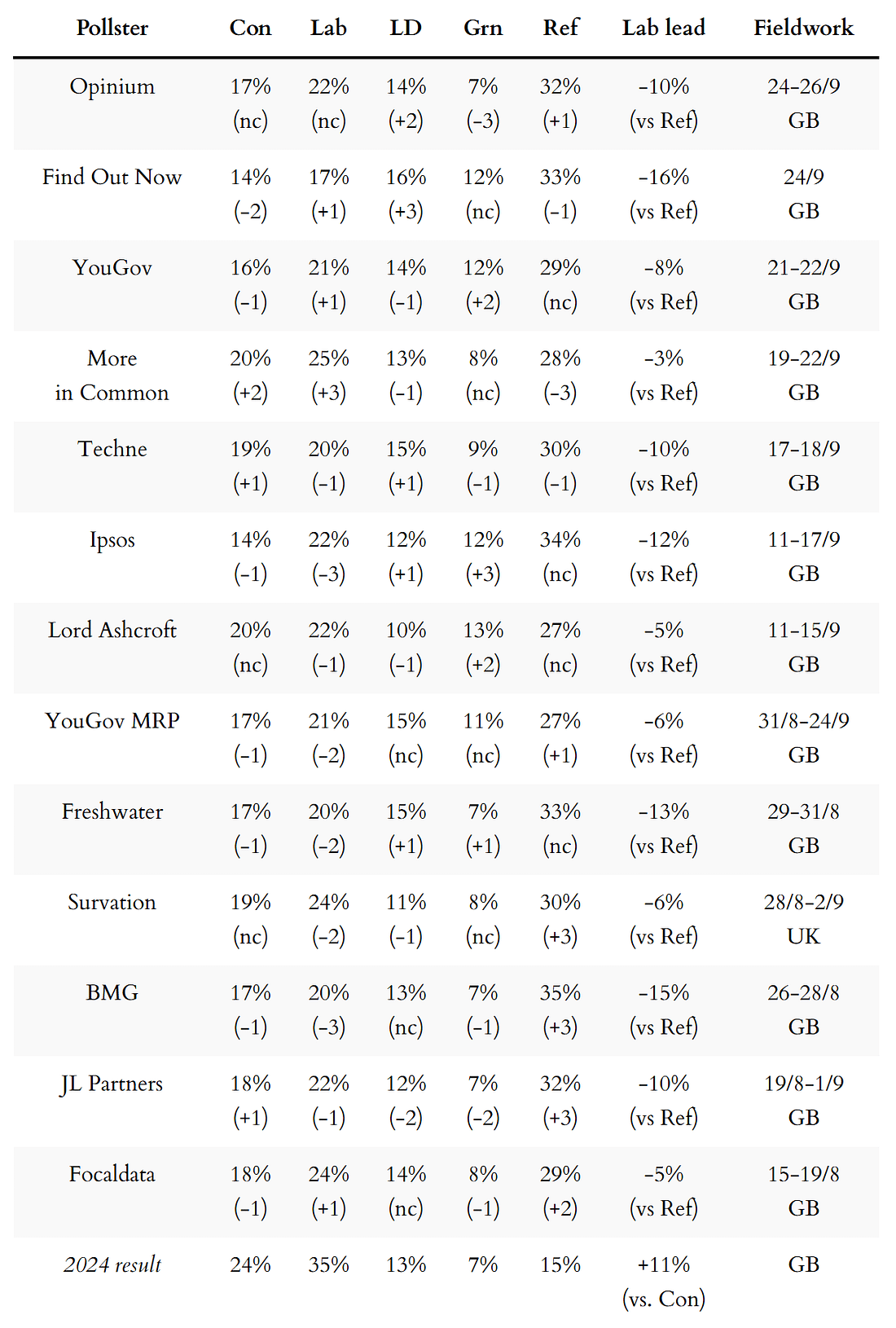
Here are the latest national voting intention figures from each of the pollsters currently active.
The hint from one poll that there might be a post-leadership election bump for the Greens has not been sustained. We also have had a poll putting the Conservatives fourth, behind the Lib Dems, something they have flirted with in a few previous polls but without a sustained slump to fourth, so far at least.
The sustained nature of Reform’s lead means the large variations in it between pollsters are getting less attention than perhaps they should. If the polls narrow a little, that sort of spread will mean different pollsters putting different parties in first place.
 |
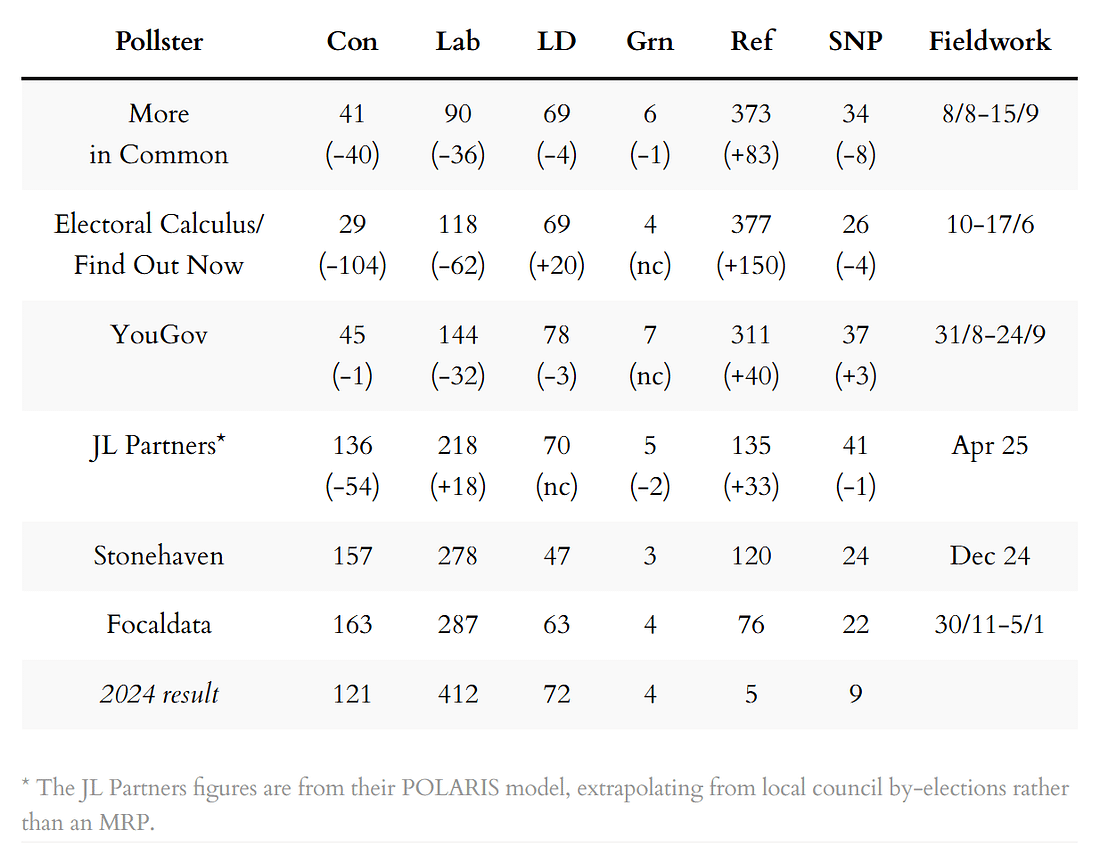
Next, the latest seat projections from MRP models and similar, also sorted by fieldwork dates. As these are infrequent, note how old the ‘latest’ data is.
 |
Finally, a summary of the latest leadership ratings, sorted by pollster name and with data for Zack Polanski starting to appear:
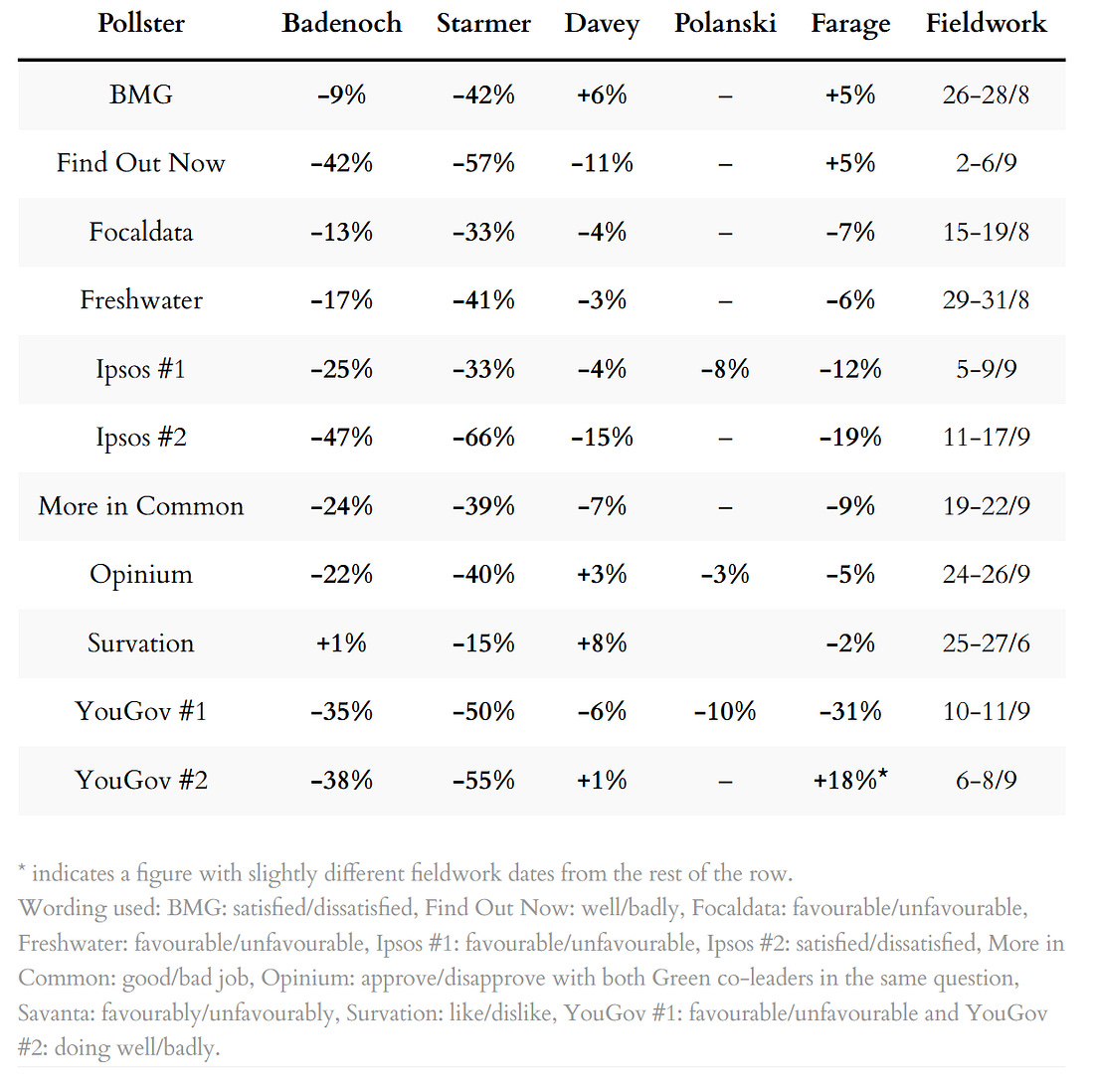 |
For more details, and updates during the week as each new poll comes out, see my regularly updated tables here and follow The Week in Polls on Bluesky.
For the historic figures, including Parliamentary by-election polls, see PollBase.
Catch up on the previous two editions


My privacy policy and other legal information are available here. Links to purchase books online are usually affiliate links which pay a commission for each sale.
Quotes from social media messages are occasionally lightly edited for punctuation and clarity.
If you are subscribed to other email lists of mine, please note that unsubscribing from this one won’t automatically remove you from the others. If you wish to be removed from all my lists, simply reply to this email to let me know.
Two-bloc politics still means you need to reach outside your comfort zone, and other polling news
The following 10 findings from the most recent polls and analysis are only for subscribers who pay for the full edition, but you can sign up for a free trial to read them straight away.
It is increasingly common to talk about British politics becoming a contest featuring two political blocs, with competition predominantly within each of the...

Continue reading this post for free in the Substack app
| ||||||||||

