|
Together with:
|

|
|
|
|
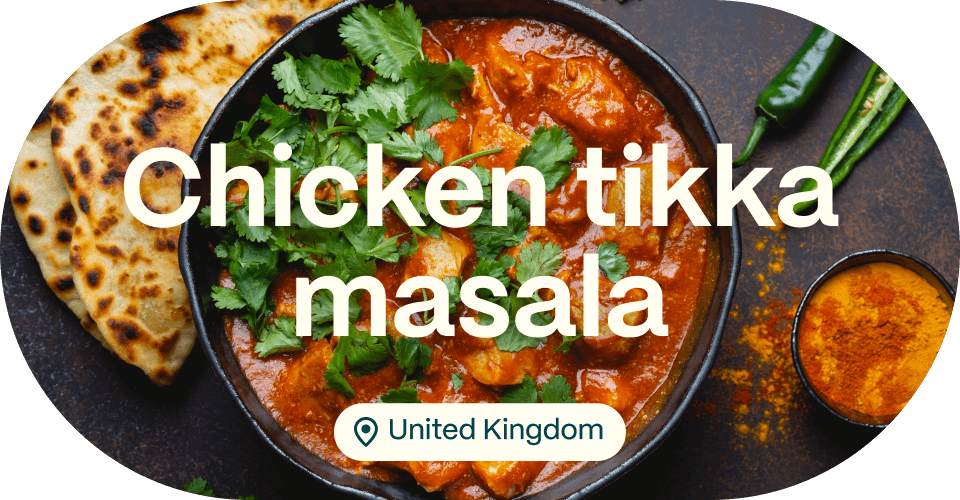
When it comes to national dishes, the UK-an island nation comprising several countries-officially has a few. There's haggis for Scotland and cawl for Wales, maybe the Ulster fry for Northern Ireland. You might expect either fish and chips or roast beef and Yorkshire puddings for England. While each is a staple in its respective country, there's a singular dish that has unified all of those countries for decades: chicken tikka masala.
When I got word that I'd be doing a deep dive into chicken tikka masala, my husband was conveniently on a business trip in Glasgow-so I dispatched him to the restaurant where it all began.
Being British, he's had his fair share of chicken tikka masala, and while he admits they are indeed different from dishes eaten throughout India, he's in favor of the British Indian take. (Having grown up in Germany, I didn't really try Indian cuisine until I moved to the UK, and while I prefer spicier dishes on the whole, sometimes a good bowl of chicken tikka masala really hits the spot.)
Despite having tasted many chicken tikka masalas across the UK, my husband reported that this one-at Shish Mahal-was the best he'd ever had.
He set the scene for me: Owner Asif Ali walked through his restaurant, very obviously part of the West End community. He greeted his regulars personally, asking after their children and a recent biking trip they'd taken. Among the locals, my husband said there were a few Americans. When I later spoke to Ali on the phone, he confirmed they'd come all the way from Edinburgh by train for dinner, drawn in by the history of the place.
After all, this is where chicken tikka masala was invented in the 1970s by none other than Ali's late father, Ali Ahmed Aslam, known simply by most as Mr. Ali. Or so legend has it. As with all good legends, the true origin is somewhat steeped in mystery, but Mr. Ali's claim is widely acknowledged.
|
|
|

Today's fastest-growing software company might surprise you 🤳
🚨 Heads up! It's not the publicly traded tech giant you might expect... Meet $MODE, the disruptor turning phones into potential income generators. Investors are buzzing about the company's pre-IPO offering.1
📲 Mode saw 32,481% revenue growth from 2019 to 2022, ranking them the #1 overall software company on Deloitte's most recent fastest-growing companies list2 by aiming to pioneer "Privatized Universal Basic Income" powered by technology-not government. Their flagship product, EarnPhone, has already helped consumers earn & save $325M+.
🫴 Mode's Pre-IPO offering1 is live at $0.26/share-20,000+ shareholders already participated in its previous sold-out offering. There's still time to get in on Mode's pre-IPO raise and even lock in 100% bonus shares3... but only until their current raise closes for good. Claim this exclusive bonus while you can!4
|
|
Pleasing the British palate
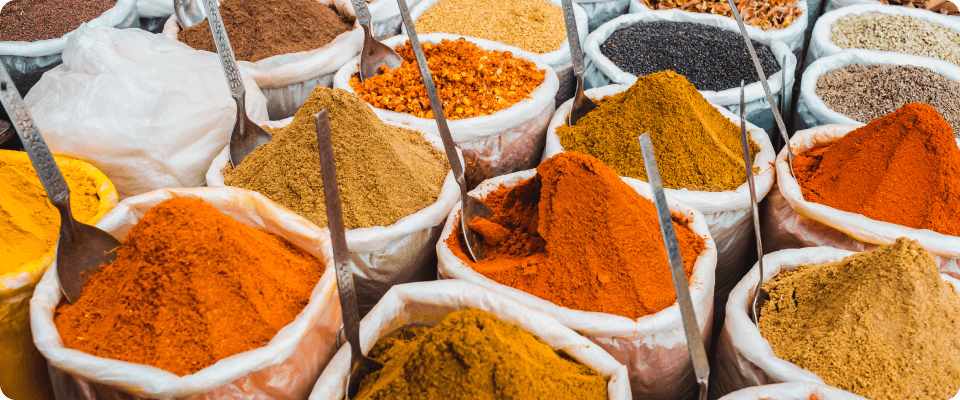
Tikka in Hindi translates to "pieces," and masala means a mixture of ground spices. While it certainly sounds like typical Indian food, you'll find few Indians ordering the dish, and you'd be hard pushed to find it-at least as it's made throughout the UK-on any menu on the Indian subcontinent.
The Brits love a good curry, an appetite that originated when the British ruled India from 1858 to 1947. After India gained independence in 1947, an influx of Bangladeshi, Pakistani, and Indian migrant chefs brought recipes to the UK. In the 1960s, these chefs opened restaurants that served traditional dishes, as well as new creations, including chicken tikka masala.
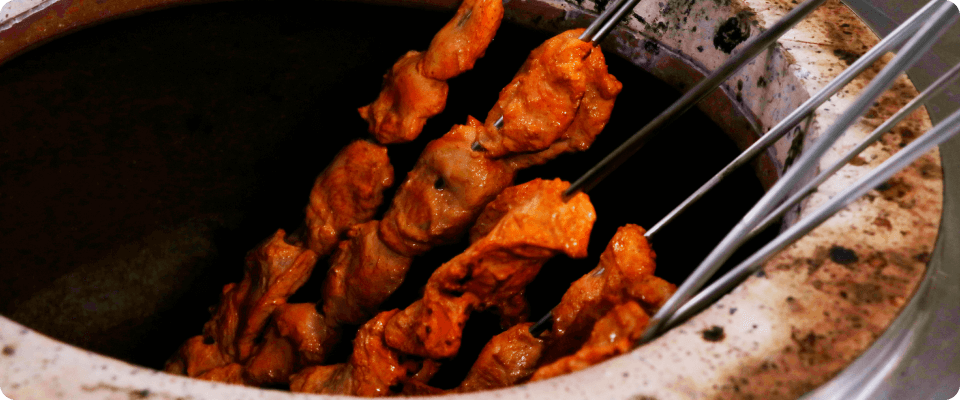
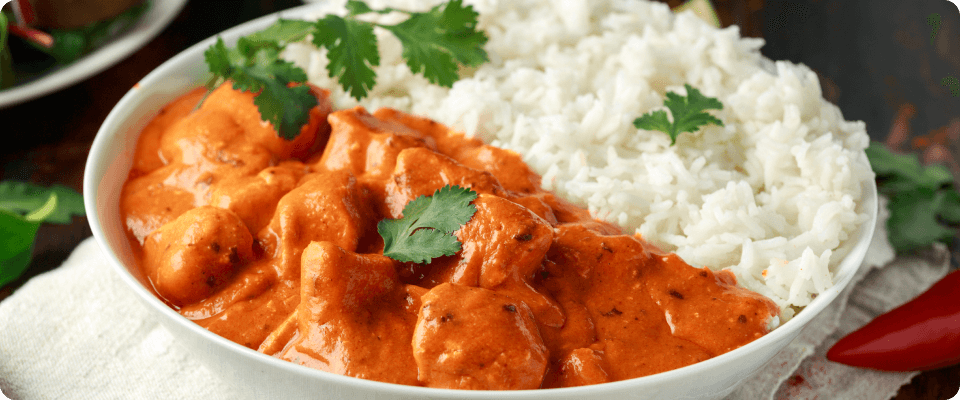
Chicken tikka masala-often abbreviated to a snappy CTM for ease-is a creamy dish of soft, marinated, boneless chicken pieces in a spiced (but not spicy) tomato sauce flavored with garam masala, red chili powder, turmeric, coriander, and other spices. The chicken-usually marinated twice, grilled in a tandoor oven, finished in a pan with tomato sauce and cream, and served with rice-is a succulent and warming meal. But it didn't exactly start that way.
The story goes that some of Mr. Ali's customers complained that their chicken tikka-grilled, marinated chicken pieces sans sauce-was too dry. To please the guests, the inventive chef added some creamy tomato sauce to the dish. Critics say he simply added a tin of tomato soup, and his son easily admits to that.
When I spoke with him on the phone, Ali revealed: "It is true that the first few times my father served the dish, it was made with condensed tomato soup. But soon enough, we isolated the ingredients, enhanced the recipe, and even added our secret ingredient." No surprise, Ali will not divulge the secret ingredient, but it certainly does the trick.
"The original chicken tikka masala was created for the Scottish palate, which is a very sophisticated one and not one that wants to have its taste buds bludgeoned to death by spiciness," Ali says. The love for the dish spread from there.
|
|
"Delectably inauthentic"
Like many favorite dishes that have entire nations enthralled (think döner kebab in Germany), CTM is not necessarily revered by food critics; instead, it's somewhat grudgingly acknowledged. Respected food writer Tom Parker Bowles, the son of the UK's Queen Camilla, called CTM a "delectably inauthentic dish" in the Daily Mail.
The "delectable" claim stands without challenge, while the "inauthentic" might be true only on some levels. CTM has certainly been inspired by authentic Indian cuisine. Take murgh makhani, for instance-a Punjabi butter chicken dish where the marinated chicken pieces, spices, and cooking methods are undeniably Indian.
There are parallels between the two dishes, as the tandoori grilling method used by both is very much part of Indian cuisine, and the spices are authentic. And while many people argue that Indian cuisine, by and large, tends to be spicier than CTM, that is simply not true (Northern Indian cuisine is proof). Sure, the addition of tomato sauce (or condensed tomato soup) is certainly not authentic, but adding cream to a dish is.
So perhaps it's the bright orange hue that makes it somewhat inauthentic. After all, some restaurants still use food coloring to bring out that prominent orangey-red color that's traditionally been emblematic of CTM; these days, many restaurants have stopped that practice, choosing to embrace the more natural tomato-and-cream coloration.
Regardless of its inherent links to the subcontinent, it's clear that this dish in particular is regarded as more British than Indian, and it's more widely eaten by the Brits than Indians. Maybe it's the color that's driven a wedge between CTM supporters and opponents all of these years.
|
|
|
Trusted Housesitters connects homeowners and house and pet sitters so you can work remotely without paying for accommodations.
Right now, Going members can get 20% off all new subscriptions of any membership tier with the code GOING20.
|
|
The award goes to...
While CTM may be slipping from the top spot as the UK's favorite dish-with the traditional roast dinner, fish and chips, and good old pizza re-emerging as family-favorite meals-it's far from on its way out. Take a spin through the UK, and you'll see just how prevalent CTM (and Indian food, more broadly) is.
There are reportedly some 12,000 curry houses across the UK, ranging from simple diners and takeaway shops to Michelin-star restaurants, such as Gymkhana in London. The UK has held a National Curry Week across the country every October since 1998; they even hand out a hotly contested British Curry Award. There are claims that by 2009, some 25 million portions of CTM were consumed each year across the UK, with the dish making up 7 percent of all curries served in the nation.
It became the title of the 2005, UK-based Chicken Tikka Masala film, and it also had the titular role in the 2018 short film Forbidden Tikka Masala. Meanwhile, a Scottish member of Parliament tried to have the dish validated as a Scottish national dish in 2009; unfortunately, the motion failed. Michelin-star Indian chef Rohit Ghai is even offering his own masterclass about creating the perfect CTM at home.
"Going for a curry" is practically a weekly tradition, but the Brits don't only go out to their local Indian restaurant to enjoy a CTM. They may well stay in, not necessarily cooking the dish from scratch but still eating it. National supermarket chain Sainsbury's supposedly sells 1.6 million chicken tikka masala meals annually and stocks more than a dozen related products, including vegetarian variations and chicken tikka masala pasta sauce, making CTM the highest-selling ready-to-eat meal at Sainsbury's.
Regardless of whether it's your first time in the UK or your fiftieth, you pick up a serving at your local Indian restaurant or you pick up a ready-made meal at the supermarket, you take it with a healthy drizzle of red food coloring or you opt for the more natural tomato-and-cream coloring, one thing is certain: This Indian-influenced, UK-finessed curry dish is one to try.
How to try chicken tikka masala
Want to try chicken tikka masala? Read our guide for where to get the best plate in the UK, from London to Glasgow, historic restaurants to takeaway shops.
|
|

|
|
With local expert:
Ulrike Lemmin-Woolfrey
|
Ulrike is a freelance travel writer, guidebook author, and serial expat. When she's not on the move, then she can be found in a bookstore or people-watching on a café terrace. She has written for publications such as National Geographic, Condé Nast Traveler, and BBC Travel, with favorite subjects including all things luxury travel, art, or anything quirky that piques her interest.
|
|
Related Content
London: The big British capital that's actually quite small
Read more
|
|
|
Share with a fellow travel lover by forwarding to a friend.
|
|
|
Get the app today 
|
|


©Scott's Cheap Flights, Inc. DBA Going
4845 Pearl East Circle, Suite 118
PMB 28648
Boulder, CO 80301-6112
Upgrade Membership
|
Advertise
|
Email Preferences
|
Unsubscribe
1 Mode Mobile recently received their ticker reservation with Nasdaq ($MODE), indicating an intent to IPO in the next 24 months. An intent to IPO is no guarantee that an actual IPO will occur.
2 The rankings are based on submitted applications and public company database research, with winners selected based on their fiscal-year revenue growth percentage over a three-year period.
3 A minimum investment of $1,950 is required to receive bonus shares. 100% bonus shares are offered on investments of $9,950+.
4 Please read the offering circular and related risks at invest.modemobile.com. This is a paid advertisement for Mode Mobile's Regulation A+ Offering.
Past performance is no guarantee of future results. Start-up investments are speculative and involve a high degree of risk. Those investors who cannot afford to lose their entire investment should not invest in start-ups. Companies seeking startup investment tend to be in earlier stages of development and their business model, products and services may not yet be fully developed, operational or tested in the public marketplace. There is no guarantee that the stated valuation and other terms are accurate or in agreement with the market or industry valuations. Further, investors may receive illiquid and/or restricted stock that may be subject to holding period requirements and/or liquidity concerns.
DealMaker Securities LLC, a registered broker-dealer, and member of FINRA | SIPC, located at 105 Maxess Road, Suite 124, Melville, NY 11747, is the Intermediary for this offering and is not an affiliate of or connected with the Issuer. Please check our background on FINRA's BrokerCheck.
Promotional offer cannot be combined with other discounts or applied to previous subscriptions. Offer can only be redeemed on Going.com (not available in the mobile app).
|
|
|