|
 |
Dear Reader, there were mixed reactions to last weeks article about the emotional economy - befriending apps isn’t for everyone! This week we go closer to the corporate heart…
We are busy planning our Work 3 Community events programme for the rest of the year. We have a series of Work 3 webinar topics designed for learning and interesting debate. If you are interested in joining our Work 3 Community or as a Work 3 Founder member and have any questions, just hit reply to this email. Your membership supports our work to build more products, events, and future of work insights in the coming months.
Andy and Matteo
The End of the Corporate Silo
Will self-managed teams and tech stacks reshape the traditional company?
|

| |||||||||||||||


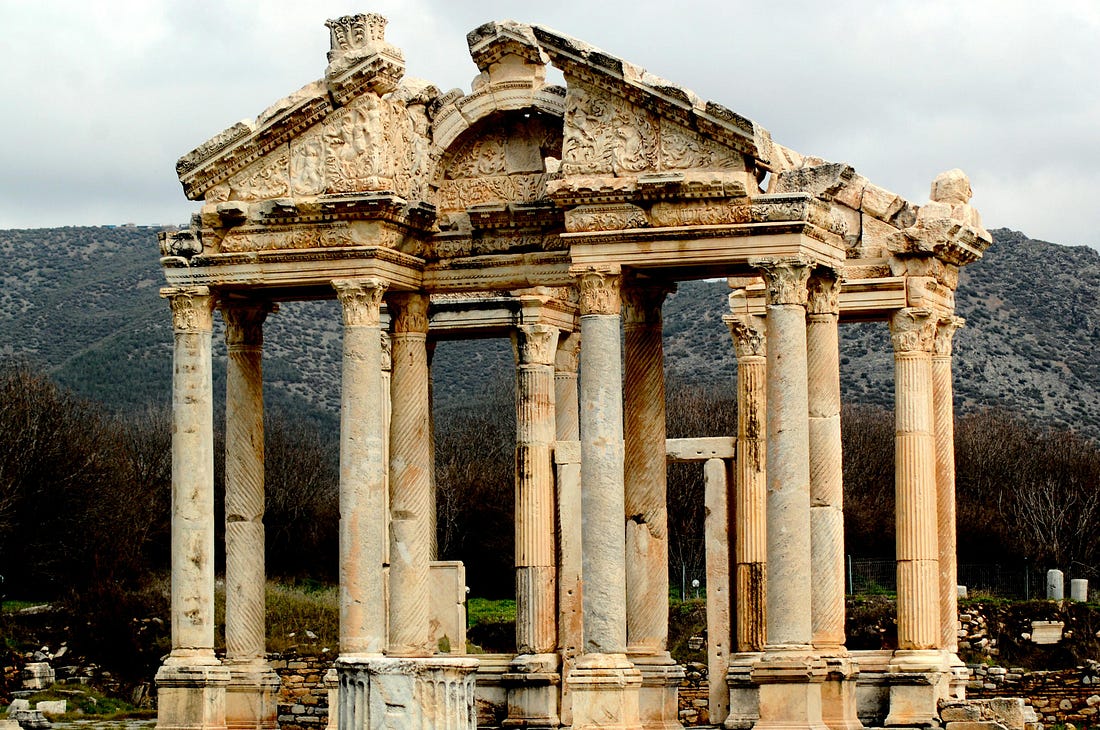 |
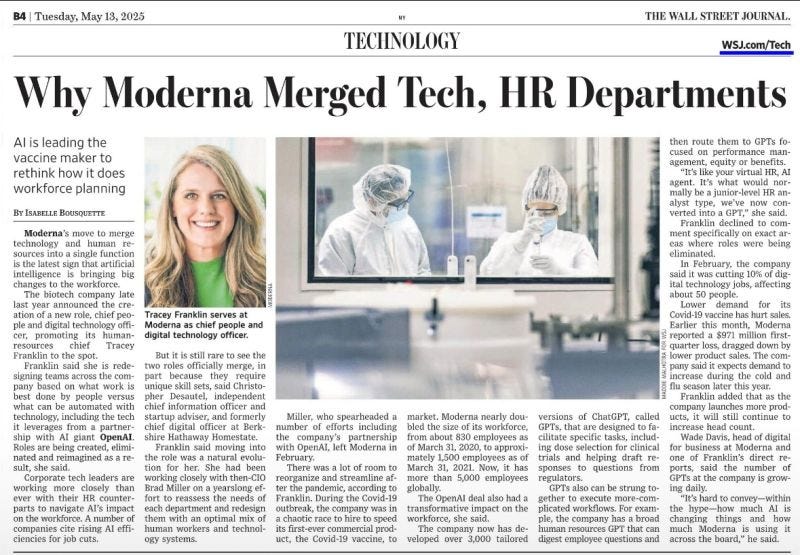
Moderna made headlines recently by merging its HR and IT departments.
The LinkedIn crowd called it bold. Smart. The future.
But are we asking the wrong question?
Because the real issue isn’t whether to merge HR and IT.
It’s rethinking what these functions should look like in a very different world of work.
Where Did Silos Come From?
We built the 20th-century corporation like a factory.
Specialised functions. Linear processes. Top-down control.
Silos made sense in this world. They helped firms scale. They reduced ambiguity. They centralised decision-making.
This wasn’t accidental. It was engineered.
Think Frederick Taylor and his stopwatch. Think IBM and General Motors.
Buildings, equipment, people - all assets to be managed.
IDC estimates Fortune 500 firms lose $30 billion a year in productivity due to siloed knowledge.
Then came the back-office revolution in the 1990s: shared services, ERP systems, account managers. In HR, we got the so called Ulrich Model: Centres of Expertise, Intranet portals, HR Business Partners, and outsourced admin.
The theory was sound, the implementation was mixed.
Today the drivers that brought us three-legged operating models have now changed.
In her book, The Silo Effect: The Peril of Expertise and the Promise of Breaking Down Barriers, Gillian Tett defines silos as the compartmentalisation within organizations that leads to isolated departments or teams. While specialisation can enhance efficiency, excessive division fosters tunnel vision, miscommunication, and missed opportunities. She notes that humans naturally categorise to manage complexity, but rigid classifications can obscure broader perspectives and stifle adaptability.
When the World Changed, the Silos Stayed
Today, the environment has flipped:
Markets move faster.
Customers expect personalisation.
The workforce has changed - demanding more autonomy, flexibility, autonomy.
Technology can do what humans once did in support roles.
Yet many firms still operate with strong functional boundaries — in HR, Finance, Marketing, and IT. These structures persist because they’re familiar, and in many ways, they’ve served us well. But in today’s fast-moving environment, that same familiarity can limit our agility.
According to Gallup, only 18% of leaders believe their people share a common purpose across functions.
The silo is no longer a feature. It's a bug.
AI Is Not the Disruption. It’s the Accelerant.
Commentators frame AI as a threat to HR or Finance.
For example the Moderna merger of IT and HR.
 |
But this is the wrong lens.
A better question than,
‘How will AI change HR?’
Is
‘What people management capability do we need in our organisation?’
Startups today often run global operations with no HR director, no internal IT, and outsourced finance. They use a stack.
For example :- Deel, Notion, Stripe, ChatGPT.
Functions, roles, tasks aren’t being improved - some of them are being replaced.
Case Study: Buurtzorg and the Post-Silo Organisation
Buurtzorg is a Dutch healthcare organisation with 15,000 nurses.
It has no traditional HR. No central scheduling. No bloated headquarters.
Instead: self-managed teams. Digital tools. A tiny back office.
This isn’t theory. It’s been working for over a decade.
And it’s not alone. Look at Valve. GitLab. Haier’s micro-enterprises.
These firms didn’t ‘merge departments’
They asked a better question: how do we design work for outcomes, not processes?
What Comes After the Silo?
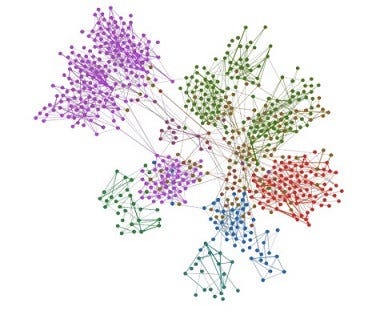 |
We are moving from:
Departments → Capabilities
Control → Coordination
Org charts → Networks and Ecosystems
Roles and Responsibilities → AI powered-workflows
Centralised Support functions → Increasingly self-organised teams
Top-down remits → bonding and bridging connections between teams
Work done inside the firm → work sourced outside the boundaries of the firm
Data silos → Tech stacks
Using technology to streamline HR, Finance and IT is not a new endeavour.
It also had mixed results. Designing work needs a systems thinking approach, not force-fitting tech onto the workforce.
In 2025, there are many more technology options that completely bypass the crystallised SaaS systems built on 20th century processes.
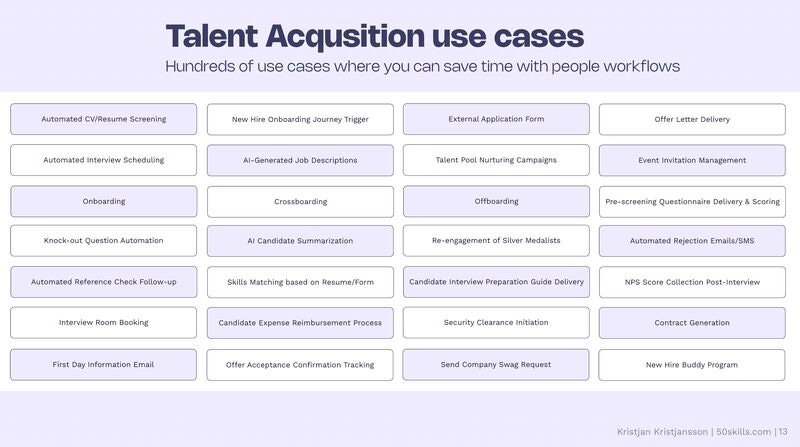 |
The new building blocks are teams, platforms, and intelligent systems. Not boxes on a chart.
Functions don’t disappear overnight. But they thin out. They become embedded, distributed, or automated.
Work becomes modular. Teams assemble around missions, not reporting lines.
And leaders become ecosystem designers.
Work Design, Work Design, Work Design
Nothing is less productive than to make more efficient what should not be done at all.
Peter Drucker
This isn’t just about technology. Or structure. It’s about first principles.
It’s about the Who, When, How, Why, and Where of Work.
What is the purpose of the task?
Who (or what) is best placed to do it?
How do we design the system around that?
What work is better done by humans, face-to-face, or left to AI Agents?
While it’s tempting to assess AI’s impact by mapping it to current HR roles, that view may be too narrow. A broader lens is needed — one that considers new ways of working altogether.
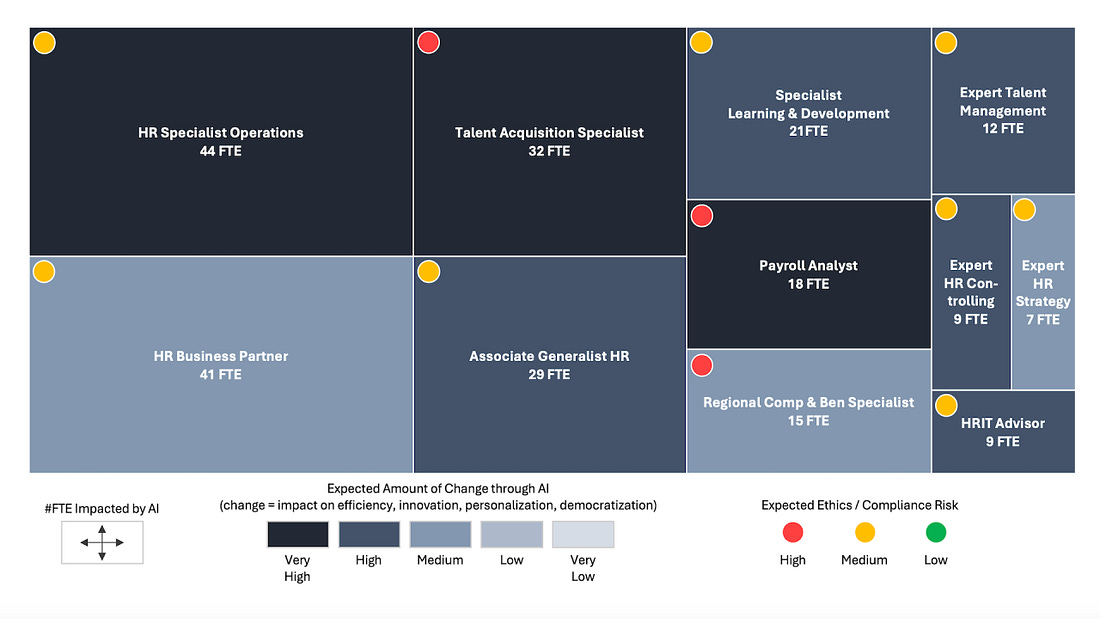
Merging two legacy departments will make sense for some companies depending on their capability and goals.
In many cases, successful HR transformation means shifting operational tasks to empowered teams — supported by AI agents and automation where it makes sense. What is left is a smaller central function - ensuring the people management strategy is delivered, teams have the right workforce technology, compliance and risk are managed.
We’ll be unpacking this in future Work 3 webinars and articles.
We need to dismantle the very idea of the silo.
So here’s the question
Silos are outdated, and the real opportunity is in redesigning work from first principles.
Merging HR and IT is a bold step, but perhaps it’s just a transition phase.
Many traditional functions — like HR, Finance, and Marketing — were built for 20th-century organisational logic. As we move toward more platform-based, modular organisations, these functions may evolve significantly — and in some cases, even dissolve into broader ecosystems.
AI will transform industries and companies long before it transforms the supporting departments of an organisation.
If you were designing your organisation from scratch today -
would you rebuild HR, Finance, IT, and Marketing as they are?
Or would you reimagine them for a more agile, tech-enabled, team-centric world?
Join the Work3 Community — And Help Shape the Future of Work
🎉 We have launched the Work 3 Community — a new space to explore the transformation of work, together. Whether you're a researcher, freelancer, policy nerd, L&D lead, or curious human — this is your invite to think more deeply about how we work, and what comes next.
💥 Join as a Work 3 Community Member to get access to monthly webinars and group discussions.
🚀 Or step up as a Work 3 Founding Member (limited to 100) to get 1:1s, early invites, and our upcoming report: The Impact of AI on Work.
📬 Work 3 Weekly (Free) - stay subscribed and keep receiving our weekly ideas, essays, and briefings. Free forever.
We believe the next chapter of work needs more questions than answers — and that the best way to figure it out is together.
A node on your network,
Andy
You're currently a free subscriber to Work3 - The Future of Work. For the full experience, upgrade your subscription.
| ||||||||||