|
 |
The Punk Playbook: What 1976 Taught Us About Making a Living
50 years after a famous gig in Manchester, what can independent workers learn from the music business?
|
| |||||||||||||||


 |
This week we start from scratch. Spiral Scratch, to be precise: the record that grew out of a gig in Manchester in 1976, which gave thousands of teenagers an itch to pick up a guitar and start a band. Most didn’t get out the garage, but some went on to inspire generations.
Over the last fifty years, the music industry has evolved through various technological and business revolutions. Vinyl, CDs, Streaming. Punk (the British kind, not Green Day) might not be your thing, but this week we ask what can creatives and freelancers learn from Sid Vicious and Jonny Rotten?
Suddenly the Gap Got Small
“Suddenly the gap between wanting to do something and actually doing it seemed small.” Jon Savage, writer and journalist.
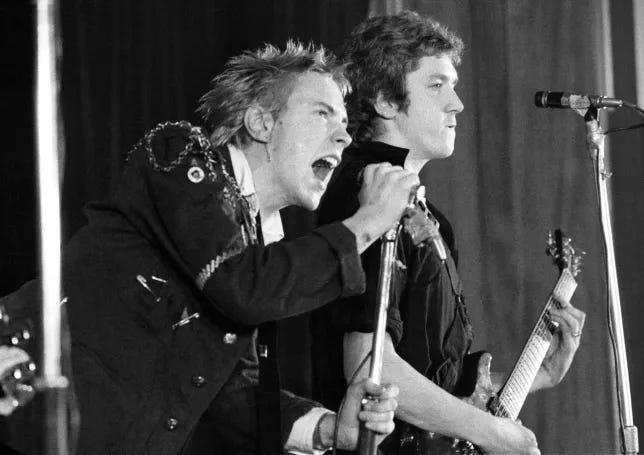
In 1976, the Sex Pistols played a couple of gigs at the Lesser Free Trade Hall in Manchester.
They were described as musically terrible, brilliant, anarchic. There may have been disagreement among the audience, but there was agreement that they had seen something special that was about to change music forever.
“The gig set off cultural bonfires across the city, sparking new bands, artists, record labels, venues, fanzines and writers.” Paul Morley, music journalist
What spread from those gigs was the DIY attitude: anyone could pick up a guitar and express themselves. The audience included future legends from Joy Division/New Order, Morrissey, the poet John Cooper Clarke, and Mark E Smith, from the mighty The Fall.
Peter Hook, who went on to form Joy Division, remembers: “The punk rock atom was split, and the very next day, having been so inspired I borrowed £35 from my mum to buy a bass guitar, and the rest is history!”
Before punk, getting a record out meant getting past the gatekeepers. The major labels controlled the studios, the pressing, the distribution and the radio. In the 1970s, rock music had become verbose, pompous, predictable and distinctly middle-aged. With punk the feeling was that people who had spent their lives waiting to be picked could just begin.
Marco Pirroni, Adam Ant’s guitarist, put it simply: “I just need a guitar and three mates.”
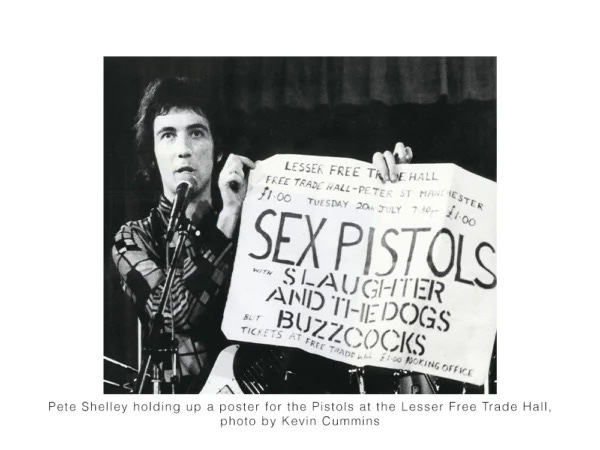 |
Buzzcocks didn’t expect to get a record deal, so they borrowed £500 from friends and set up their own label, New Hormones. They pressed 1,000 copies of the Spiral Scratch EP, hoping to sell enough to repay the loans. It eventually sold 16,000 copies and reached the Top 40.
And Indie music was born. B’dum, b’dum…
Never Mind the Corporates
Others followed. By 1978, ZigZag magazine had listed 120 labels with punk acts on their rosters. Ordinary people now had hope they could make a record with three chords, a guitar and a couple of mates.
Factory Records, home to Joy Division and later New Order, was the most ambitious Manchester version. It was successful, but even with creative freedom, someone still had to make the money work.
“There was a contract and the contract said we own nothing, the musicians own everything. That was a mistake, but it was very nice at the time and very idealistic.” Tony Wilson, boss of Factory Records
Factory, named after Warhol’s Factory in New York, shows something important: independent people could build a real enterprise, a whole network of musicians, designers, producers and promoters.
Meanwhile, the majors adapted. If they couldn’t stop the underground, they could sign it. Over time, the rough edges were smoothed, packaged and sold back. The sociologist Dick Hebdige described this decades ago as incorporation: the establishment neutralises a radical idea by turning it into a product.
Sound familiar?
For musicians, behind the noise was something simple and very human: people wanted to earn a living, or at least build a creative life, on their own terms.
24 Hour Party People
“This is Manchester, we do things differently here.” Tony Wilson
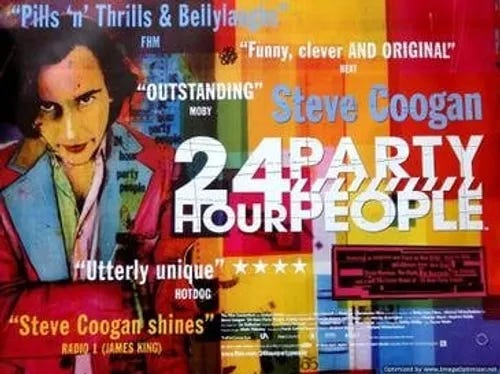 |
My formative years of going to gigs in Manchester came about 12 years after the Sex Pistols gig. The city centre is fairly small and walkable, and I used to go out with a group of friends. You could start the night at an indie gig with jangling guitars at The Ritz, or Boardwalk, and end up at a house club, like the Haçienda, or a funk club like Man Alive, or both. The same characters mixed between the different venues and genres. The magnificent Joy Division had become New Order, sold a lot of records, and backed the Haçienda club, which helped bring house music to the UK. People from different backgrounds mixed together, some collaborated, and this is where the creative magic happened. Ecstasy might have helped too, but that is another story, which has its own movie: 24 Hour Party People.
Manchester, So Much to Answer For…
If you want the soundtrack, start here:
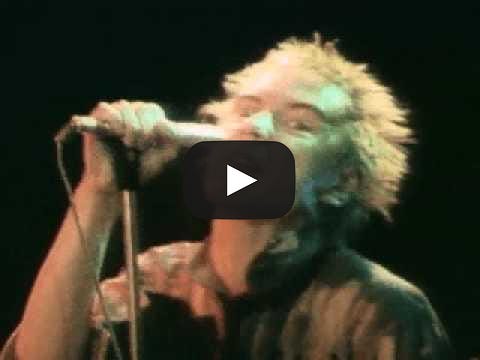
Anarchy in the UK – Sex Pistols – a debut single to scare the parents.
What Do I Get? – Buzzcocks – the question every freelancer asks at invoice time.
Transmission – Joy Division – “dance, dance, dance to the radio.”
Industrial Estate – The Fall – “well you started here to earn your pay”
Would a Punk Have Taken Spotify?
The music industry, like any other, has evolved since 1976. We went from vinyl to CDs and file-sharing sites, and now vinyl is making a comeback as people crave some analogue authenticity. The internet destroyed the old record companies’ business model, then smartphones made streaming the norm. In 2017, streaming became the industry’s biggest source of revenue.
Would a young punk band in ’76 have signed up to Spotify? Release your music worldwide and reach listeners abroad, without a record deal. Many would have grabbed it. That’s the world we now live in.
Spotify will tell you it has helped artists find their fans, and its own figures are impressive. Last year it paid £860m to the UK music industry, more than double what it paid a decade ago, and 45% of the royalties generated by UK artists went to independent artists or labels. Globally, more than 1,500 artists earned over $1m from the platform.
Musicians adapted. Many stopped thinking in albums and started thinking in tracks, building portfolios of recordings, gigs, merchandise, memberships and direct sales. Others built direct relationships with fans through Bandcamp, mailing lists and subscriptions. This is the idea behind Kevin Kelly’s ‘1,000 True Fans’: a committed audience, supporting you directly, can sustain a modest living.
Simple illustrative arithmetic: 1,000 people spending £100 a year is £100,000 in gross revenue, before other costs. It’s a viable living at a scale a big organisation would find uninteresting.
But the reality for independent musicians is harder. Access is cheaper than ever; bargaining power hasn’t kept pace. Dave Haslam (who provided the soundtrack for many a Manchester night out as a DJ at clubs like the Boardwalk) has written about the economics of live music, including Kate Nash’s loss-making shows. Full houses don’t automatically mean full pockets.
What Do I Get?
If this sounds like a music industry problem, look around at your own working life.
The ‘major label’ career, with loyalty exchanged for a ladder and a pension, has faded.
In its place, millions are freelancers, consultants, fractional executives and small-business owners, effectively pressing their own records. We have seen waves of people trying to make a living outside traditional employment models: solopreneurs, playbourers, influencers. We described this as the Decentralised Workforce.
Careers are being unbundled in the same way albums were. Musicians moved from albums to tracks, and modern workers no longer define themselves with a single job description. Skills are unbundled into separate streams: a professional might be a fractional CMO, consult for a couple of clients and host a podcast.
Skills are easier to acquire and tools are cheaper than ever. No-code software and generative AI have collapsed the barriers to producing things that once needed a team.
Anyone going independent asks the Buzzcocks question: what do I get?
Can I find enough people who value my work?
Can I reach them without depending entirely on an intermediary?
What do I own?
What am I left with after everyone takes their cut?
Can I keep doing this without exhausting myself?
The music economy → the wider world of work
There are some similarities between the music industry and other creatives.
A catalogue of recordings → assets and intellectual property that earn repeatedly
Fans who come back → clients who rebuy, subscribe or refer
Labels, agents, distributors → platforms and intermediaries providing access and finance
Bands and production crews → teams assembled for a project
Streaming, gigs, merch, licensing → several income streams from the same expertise
Today’s independent workers, such as Uber drivers, Substack writers and freelance coders, might feel like autonomous punks, but they depend on digital infrastructure owned by someone else: app stores, payment gateways, cloud services.
Platforms offer freedom, but they take the margin (often 10–30%) and set the rules.
Social media has become the new fanzine. Initially a busker, Ed Sheeran got noticed through live sessions on YouTube and signed to Asylum/Atlantic in 2011. He is now one of the Spotify model’s biggest global winners.
There are success stories, but look at the shape of the market. Call it the 1% problem.
Spotify’s own figures show 80 artists earning more than $10m each from the platform last year, while the 100,000th-highest earner made a little over $7,300. A tiny proportion of hyper-visible individuals command premium rates, while everyone else can face rate-bidding wars.
For creatives, watch the market for your skill as closely as the skill itself, or it can become a race to the bottom. Visibility becomes survival, so everyone is told to build a personal brand. Like musicians, independent workers can end up with autonomy without security.
The comparison isn’t perfect. Musicians accept a ‘passion discount’ that an accountant or a logistics planner probably wouldn’t. But as a warning about what happens when production becomes cheap, music got there first.
Independence Needs Company
Your future dream is a shopping scheme – Sex Pistols
So what can we learn from the punks and the broader music industry?
First, own the relationship. A platform rents you an audience. It doesn’t give you their email addresses. The musicians who weathered streaming were those with direct links to their audience. For freelancers, that means a client list, a network and a reputation that don’t depend on one platform’s good graces.
Second, build something that keeps paying. A catalogue earns after the work is done. The question for any independent worker is: what am I creating today that can still pay me tomorrow?
Third, watch for co-option. The majors signed the punk bands and sanded off the edges. Today the equivalent is the platform that ‘partners’ with creators and freelancers, then tightens the terms once they depend on it. Real autonomy can’t be handed down from above.
And finally, independence needs company. Buzzcocks couldn’t have done it alone. They needed a venue, a pressing plant, a record shop, friends who lent money and an audience willing to take a chance. Factory was a whole scene. You can start a band yourself. Building a scene takes everyone else.
Punk’s famous slogan was Do It Yourself. The more useful version for today’s independent workforce may be Do It Together: sharing services, collective bargaining, fair contracts, pooled costs and enough financial breathing room to keep going.
The opportunity is real, and more people than ever can make and sell their own work.
Whether that becomes a livelihood depends on who owns the work, the customer relationship and the route to market. The real measure of success isn’t how many people can go independent. It’s how many can make a decent living on terms they’ve helped shape.
A point of view creates more waves,
Andy
Invite your friends and earn rewards
| ||||||||||

