|
 |
Will the Best Team Win the World Cup?
What modern football analytics reveals about talent and teamwork
|

| |||||||||||||||


 |
The 2026 World Cup will be the most watched football tournament in history.
It may also be the most analysed.
Every run, pass, press, tackle, shot and goal will be captured, coded, and interpreted.
FIFA’s 2026 Technical Study Group will analyse all 104 matches through multiple video angles and thousands of live data points.
Football remains gloriously human. It is emotion, skill, luck, pressure, exhaustion, resilience and teamwork. The best individual does not always win. The best team does not always win either.
But over time, the best systems usually give themselves a better chance.
So, as the World Cup begins, what can the world’s most analysed sport teach us about the work of us mere mortals?
The World in Motion: When Work Becomes Measurable
 |
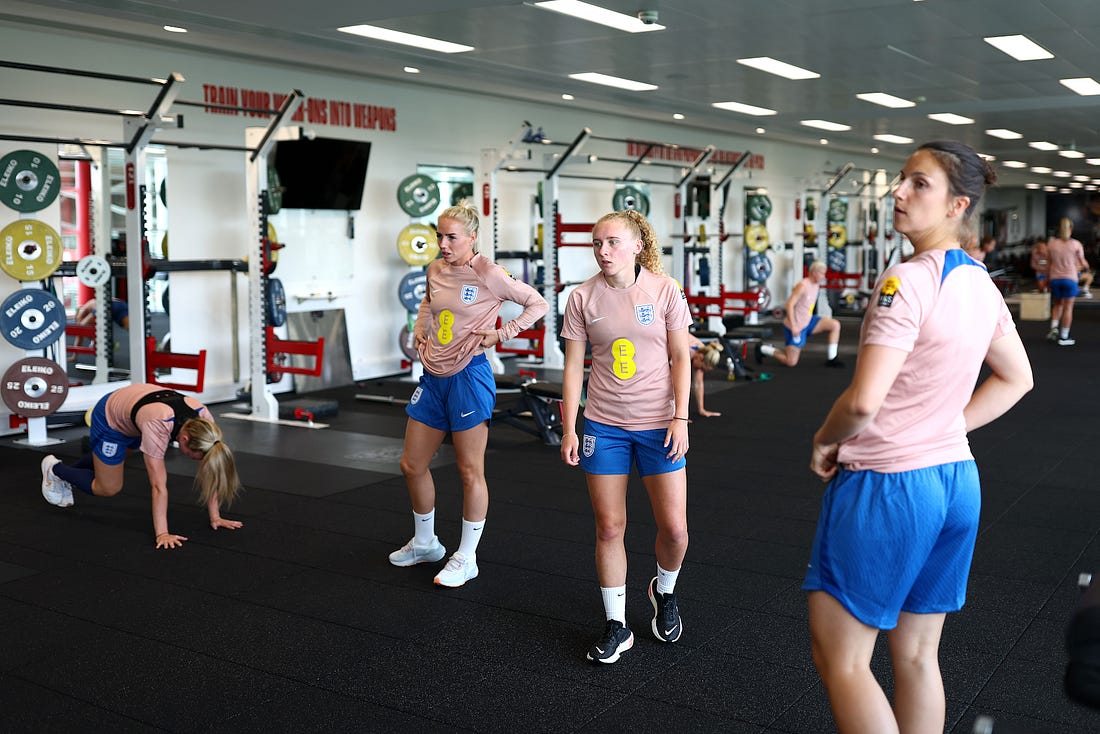
Most professional footballers wear a tracker vest under their shirts. These trackers collect data during a game, which, along with video, includes details of every pass made, tackle made, shot taken and goal scored. The England Lionesses use this technology to have detailed reports on individual players from training sessions.
 |
“Over the course of a tournament, these videos add a whopping 220,000 data points to the database” Paola Olivari - Director, Data and Analytics, Google Cloud.
Managers can track this data, plus heart-rates for an individual player.
The Lionesses also wear GPS trackers during training sessions, which generates another 1.3 million lines of squad data per session. This contributes insights into the volume and intensity of the games each footballer has participated in over the course of a season. Gathering these benchmarks helps the players and coaches understand changes and risks for injuries and peak performance levels.
The smart vests are used by the most successful World Cup team of all time, Brazil.
 |
The tracking technology is used to monitor individual performance through the season to spot injury risk, and also team selection, and substitutions.
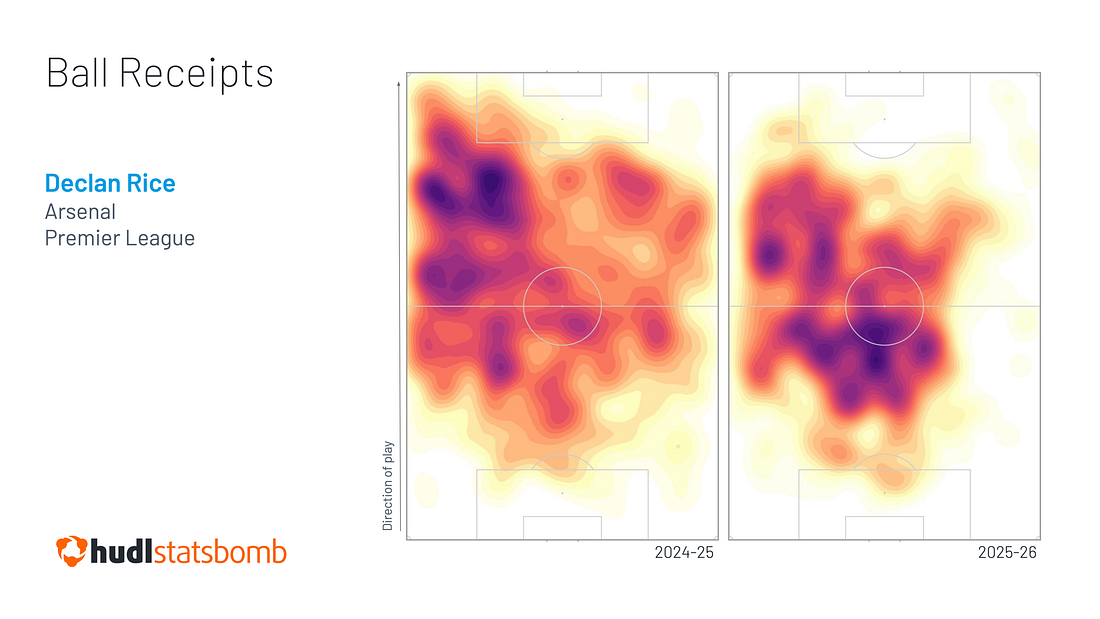 |
So having this player data is one thing, using it to win tournaments is another challenge.
Systems 1, Players 0
“A good system will beat a good player every time”
A Football Manager (with a hat-tip to W. Edwards Deming)
Big expectations are not enough to win a long tournament like the World Cup.
In 2018, the reigning champions Germany came bottom of the group stages after losing to Mexico and South Korea. Reigning World and Euro Champions France, in 2002, went home with one point and no goals.
You can’t just put a great player, or team, in a bad system and expect it to work out.
It might be argued that the last World Cup Winners, Argentina, won because Lionel Messi, won the cup almost single-handedly.
However, Argentina did not win because Messi was brilliant in isolation. They won because a robust team was built around Messi’s qualities.
Interesting to read the FIFA match report - Messi does not have the best stats on the pitch.
Overall organisational health is key for a team to be successful.
Skills Ecosystems
Talking of Lionel Messi, he has captained his country to win the World Cup, won a record eight Ballon d’Or awards, and 34 trophies with Barcelona.
He is regarded as the Greatest Player of All Time 🐐 – but how do we know?
Here is a deep-dive player analysis short video on Lionel Messi from Soccerment.
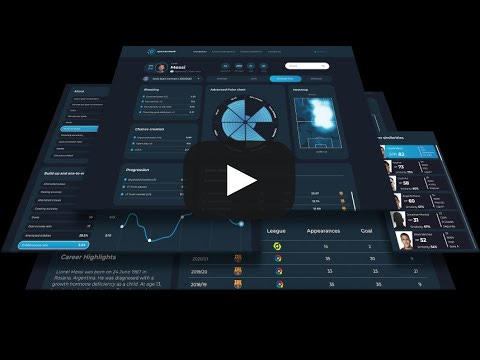
It gives his season stats, spider-charts with percentile rank compared to other players in the league. It shows his open play expected assists, expected threat from passes, completed passes per 100 touches, heat-map analysis of positions.
I am not making the argument that he is the best (I do live in Portugal after all) but that using this type of performance data on individual and team performance is fascinating.
Total Football – Changing the Rules of the Game
So if each top team has a few brilliant players, and a few more workmanlike, how do we develop a successful winning organisation?
We can play by the rules, competing pretty much the same way as the others, make some innovations, and win our fair share of games.
But. then a new approach arises, or a new technology, and slow, slow, quick - people jump ship. Sometimes fresh innovation emerges and makes you fall off your chair.
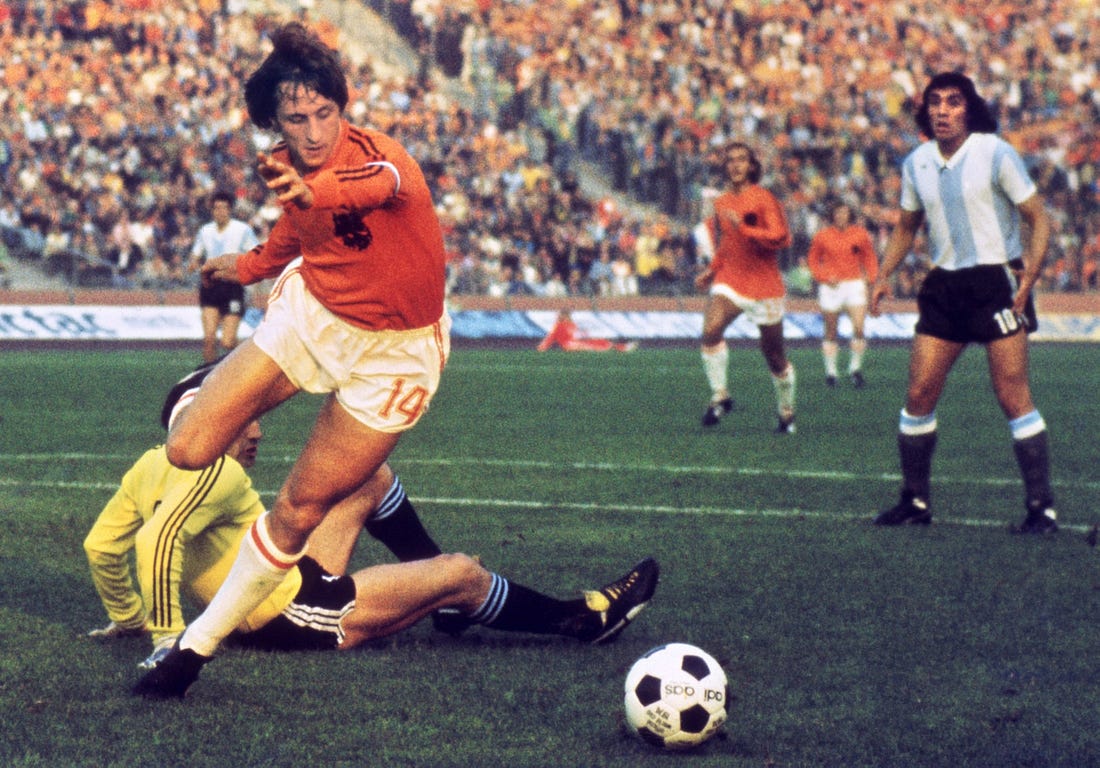
In the 1974 World Cup, the Netherlands replaced Brazil as the crowd pleasers, and made it to the final of the World Cup. Playing expressive, fluid football - it was an unconventional strategy that effectively did away with positions - players were interchangeable on the field at all times.
Total Football (or Totaalvoetbal for my Dutch friends) was a style of play in which success thrives on a collective understanding of space and movement among all 11 players. Associated with Cruyff, Rinus Michels, Ajax, and the Netherlands national football team.
Total Football wasn’t solely a gameplay style; it embodied a mentality that challenged the confines of convention and urged players to transcend their predefined roles.
As with most innovations, it didn’t spring forth in isolation; rather, it was an adaptation of strategies employed by exceptional teams of the past.
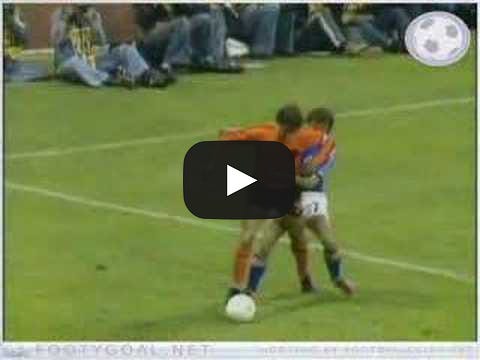
The Cruyff Turn - Total Football is much more than the ‘Cruyff Turn’, but this makes me smile every time…
A Deeper Dive Into Football Network Analysis
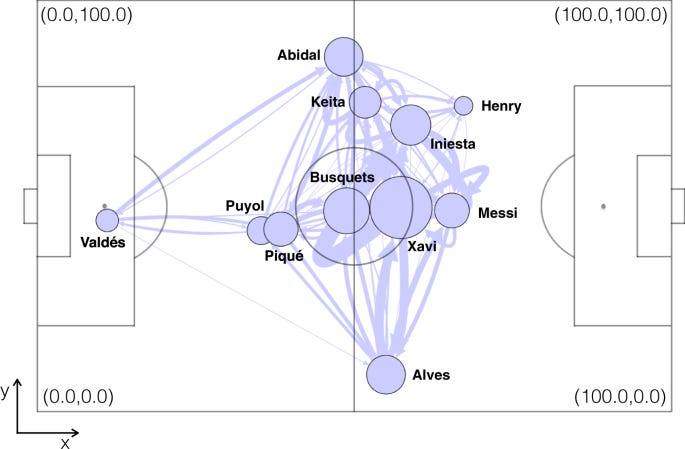 |
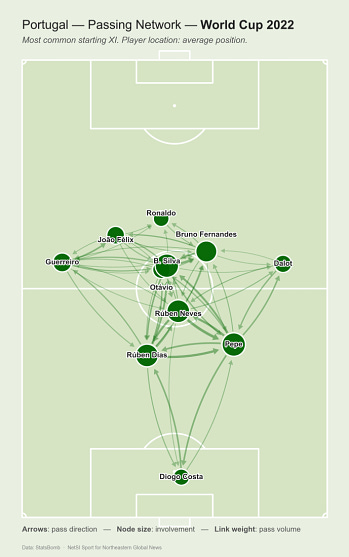
This diagram is a schematic illustration of a football passing network. In the plot, players are represented by circular nodes, whose size is proportional to their importance in the network. The position of each player is given by the average of the positions of all passes made by the player during the match. The width of the links is proportional to their weights, which account for the number of passes between players. The example is a match between Barcelona and Real Madrid.
Those who are particularly interested can read the paper in Nature - Defining a historic football team: Using Network Science to analyse Guardiola’s F.C. Barcelona.
And also, for a deeper look at the game, this is a useful resource -> FIFAs Match Report Hub from the World Cup 2022
A short personal note ⚽
My love of football started in Manchester, in the heated red-and-blue rivalry of United and City. Since then, it has taken me from the terraces of Old Trafford to Brighton’s rise into the Premier League, Benfica’s eagles🦅 in Lisbon, a Guatemalan cup final involving giant avocados🥑, the Maracanã in Rio, and La Bombonera in Buenos Aires. So yes, I know football is not really a matter of life and death. But Bill Shankly’s joke still lands because football gives us something rare: a shared emotional language for hope, belonging, failure and leadership.
 |
“I find it terrible when talents are rejected based on computer stats. Based on the criteria at Ajax now I would have been rejected. When I was 15, I couldn’t kick a ball 15 metres with my left and maybe 20 with my right. My qualities technique and vision, are not detectable by a computer.” Johan Cruyff
Extra-Time
 |
Football analytics does not remove the mystery of the game.
It does not explain the Cruyff Turn. It does not measure courage in a penalty shoot-out. It does not tell us why a team suddenly believes, or why a favourite freezes when the pressure arrives.
But it can help us see patterns we used to miss. It can show how players connect, where systems fail, when fatigue rises, and how a team creates space for talent to flourish.
That is the lesson for work, and people analytics.
The organisations of the future will not win because they collect the most data. They will win because they use data to build better systems for human judgement, trust and performance, or hope they have a genius like Cruyff or Messi on the team.
The dashboard is not the manager. The model is not the match. The data is not the team.
As the final whistle blows, football’s blend of skill and chance still mirrors the world of work. Some moves are planned. Some are improvised. Some hopeful crosses fly out of play. Others find the back of the net.
The ball is now at your feet.
Good luck!
With fingers crossed,
Andy
You're currently a free subscriber to Work3 - The Future of Work. For the full experience, upgrade your subscription.
| ||||||||||

