"Completely over-engineered."
That was the reaction from one industry insider when they first saw the inside of our mattress.
I don't think they meant it as a compliment, but we sure took it as one.
A lot of mattresses are designed to meet a minimum standard.
Built to a cost with cheap materials, simplified construction, and very little thought given to what happens after a few years of real use.
The goal is often efficiency rather than longevity.
If you've ever seen the inside of a budget mattress, that approach becomes obvious.
In some cases it's little more than a single spring unit with a thin layer of padding on top. Cheap to make and easy to ship.
It just isn't how we build mattresses.
We believe sleep is such a critical pillar of your health and so the mattress is the most important piece of furniture in your home.
The last place you should compromise.
With over 20 years' experience designing high-end furniture for luxury hotels, our team has seen first-hand what actually happens to mattresses over time.
Hotel mattresses are used night after night, year after year and they reveal weaknesses surprisingly quickly.
Layers shift, edges soften and support fades long before it should.
Not just to feel impressive for five minutes in a showroom, but to behave properly over years of real use.
Here are a few of the things we do to ensure our mattresses are built to last.
|
|
Hand-tufting
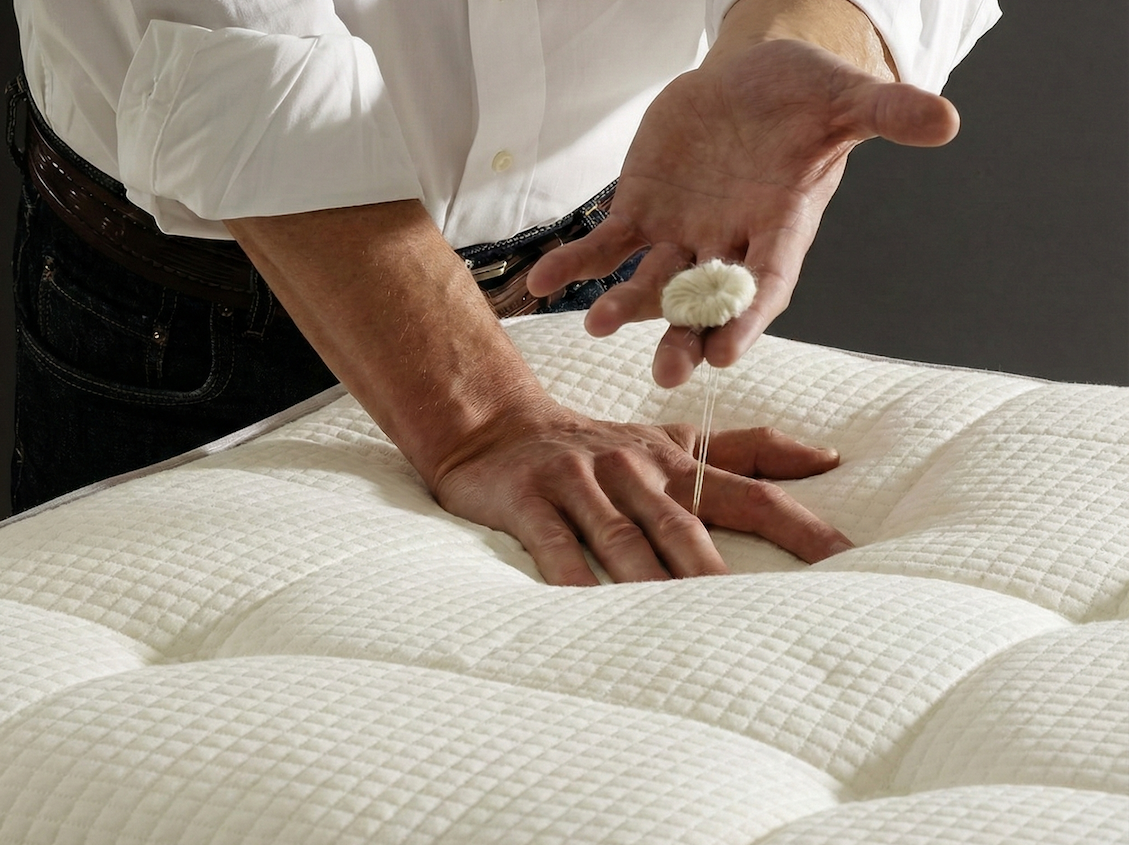
Most modern mattresses are built by stacking layers and gluing them together.
Over time, the glue can fail and those layers can move.
Hand-tufting works differently.
It physically ties the entire mattress together from top to bottom using strong cords and tufts.
Nothing relies solely on glue, every layer is mechanically secured.
What that means in practice is straightforward. The mattress holds its shape, the support stays where it should, and the feel remains consistent for far longer.
It takes more time and it requires skilled hands, so you'll usually only find it on high end traditional mattresses.
|
|
Edge support
A critical area of mattress design is how you prevent the edges of the mattress from collapsing.
Side stitching is a common approach used by heritage mattress makers, which involves fixing the perimeter springs and a supporting bar to the side fabric.
This works reasonably well, but the supporting bar means the mattresses cannot be rolled.
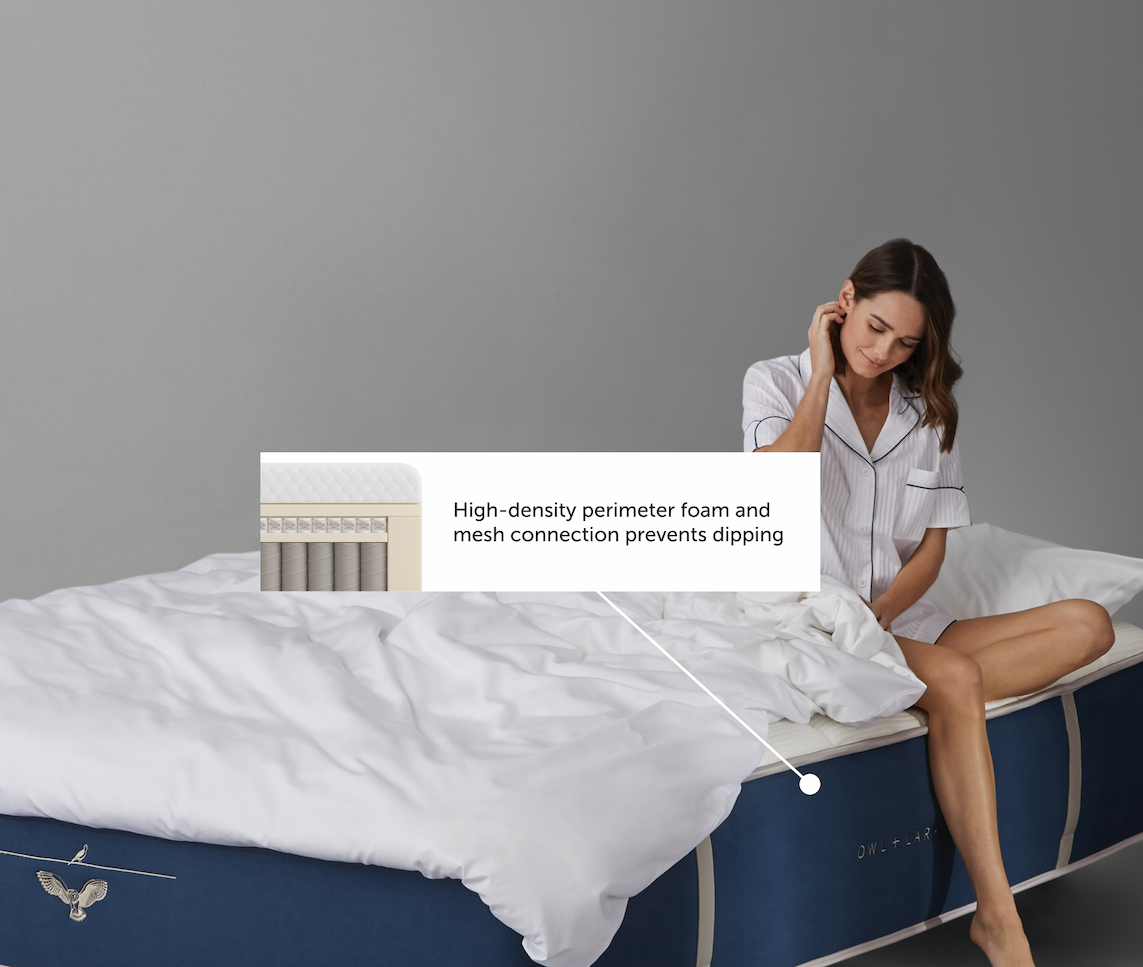
More premium modern mattresses encase all the mattress layers with a dense perimeter foam.
We take this approach a step further with a completely unique solution.
We use a high-density perimeter foam, but we also add a mechanical support system that connects each side wall to the others.
Instead of each edge acting independently, the structure works as a whole, providing additional support when it's needed most.
The result is a mattress that feels stable right to the edge and keeps its shape over time.
|
|
Stitched tape edge
Many modern mattresses use zippered covers. They're often presented as a convenience feature, allowing the cover to be removed and washed.
They also make mattresses quicker and cheaper to assemble.
The internal layers are placed inside, zipped up, and the mattress is finished.
The trade-off is structural. They are not as tightly packed from the outset.
Fabric stretches, tension loosens, and over time the mattress can lose its shape and edge stability.
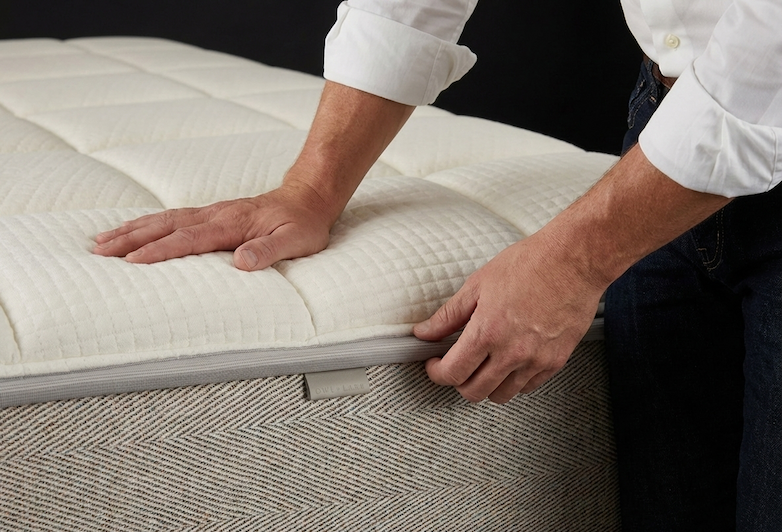
We use fully stitched tape edges instead. This means the top panel, side panels, and internal structure are permanently joined together.
In simple terms, it creates a strong outer frame that helps the mattress behave like a single, cohesive object rather than a collection of parts.
It's not something most people notice on day one. But years later, it makes a real difference.
|
|
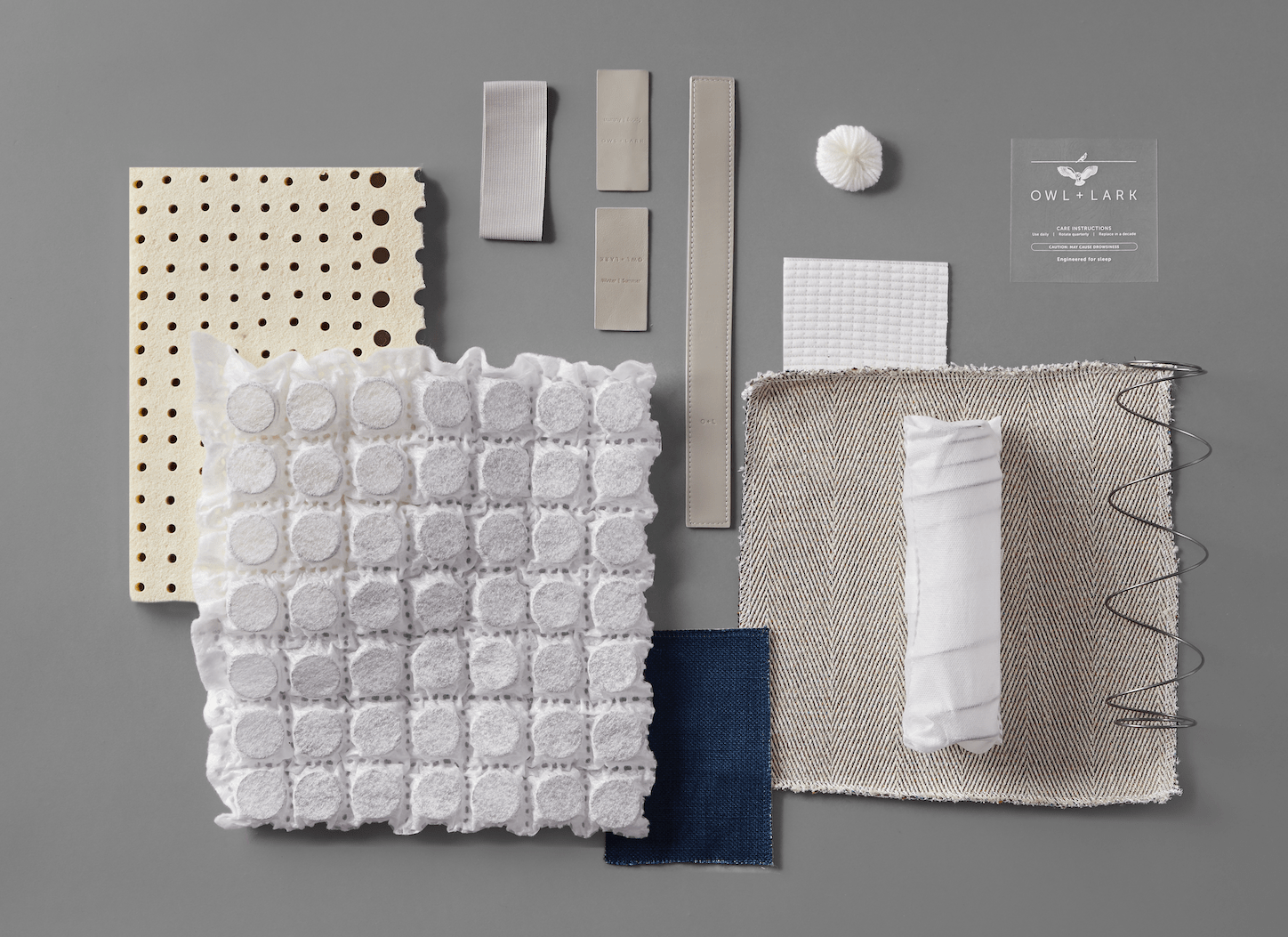
Material selection
Every material in an Owl + Lark mattress has a specific role.
We use natural fibres like wool, cashmere, and mulberry silk for breathability and comfort, alongside modern foams and advanced spring systems.
Our built-in comfort topper isn't there to just impress on day one. It's designed to relieve pressure for the life of the mattress and regulate temperature; one of the most important elements in determining sleep quality.
|
|
Yes, our mattresses take longer to make. There are more steps involved, more checks, and more time spent getting the details right. Some would say it's more than strictly necessary.
But when you're building something you'll spend a third of your life on, night after night, year after year, "just enough" didn't feel like the right target.
And the best part is that you don't have to take our word for it.
You can see and feel the construction for yourself. It's physical, mechanical, and clearly built to last.
That attention to detail is why thousands of customers love Owl + Lark.
Over-engineered? We think that's exactly right.
|
|
25% OFF SALE
Our January sale is now on with savings on every O+L product including Beds & Mattresses
|
|
|
|
|