How Canadian Police defeated rowdy clubbers, how psychological moonshots create radical improvements with little cost, and 7 frames to find them for your business
Why "Never create high customer expectations" is bad advice
One quote:
"Doing things like your bigger competitors is how to get killed in the business wars." - Jack Trout, on not differentiating a young business
Psychological Moonshots
Canadian police had a problem with rowdy clubbers in the early 2000s.
They made a mess in the streets after the clubs closed.
Shouting, fights, vandalizing...
Every single weekend.
People who lived in those neighborhoods begged the authorities to find a solution.
It wasn't easy.
They tried closing clubs earlier - hoping it'd make people drink less.
But it had the opposite effect.
Clubbers started binge drinking as they knew clubs would close early.
So everything got worse.
The police also tried putting in more shifts at night.
But it was costly for their limited budget.
And that didn't make any significant change as there were only so many police that could cover all streets with clubs.
Inventing a new police weapon
So what did they do?
There was no way to avoid young people from getting drunk.
And more police shifts were not a solution.
So they decided to change the approach.
And thought about why these young people caused trouble in the first place.
Yes, they were drunk.
But then why were there many more incidents on the streets than in the clubs?
Well, these drunk clubbers waited for taxis or buses to go home after leaving a club.
And they had nothing to do while waiting.
So they spent their excessive energy from alcohol shouting and vandalizing the streets.
If there was a way to keep them calm during that period...
Maybe the problem would be solved.
After framing the problem this way, one police officer came up with an ingenious idea.
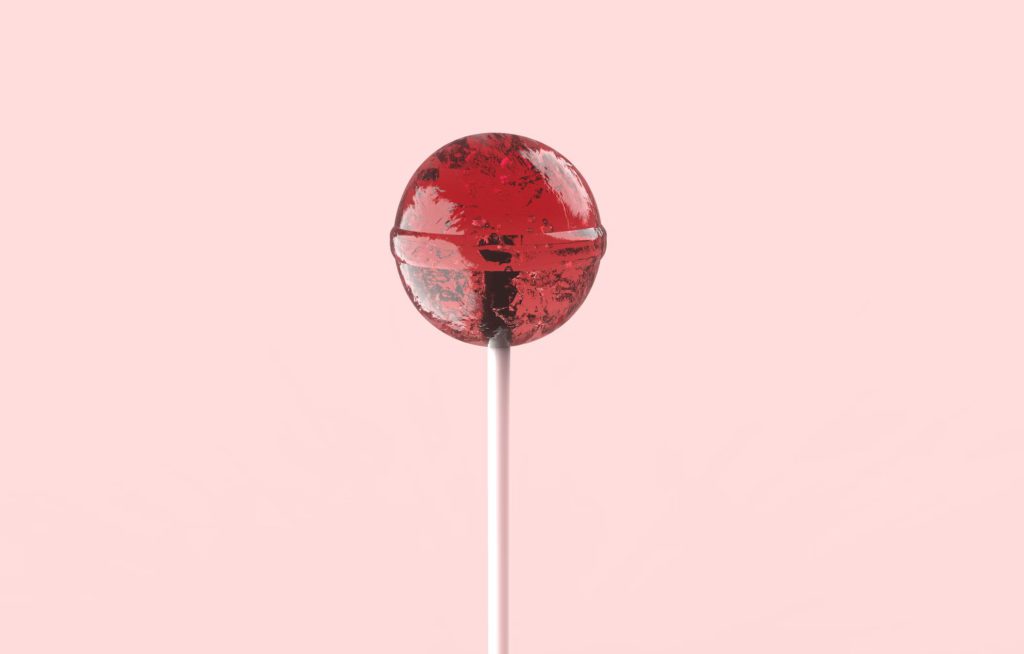
Lollipops.
You know how a crying baby immediately gets calm with a pacifier?
The idea was to do the same with drunk clubbers.
So they partnered with a club as an experiment to give away free lollipops to everybody who leaves the club.
Result?
Clubbers were hungry after drinking and dancing for hours.
They happily took the free lollipops.
Now their mouths were busy.
So they couldn't shout.
That meant fewer bravados that led to street fights.
And no more vandalism as they were focused on lollipops.
So the problems on that street magically disappeared overnight.
Lollipops cost a few cents each.
And it was nothing compared with the savings from reduced police shifts and vandalism.
The police extended the campaign to all clubs.
It became such a big success, even other countries like the UK and Ireland followed the example of the Canadian police.
An effective police weapon: Lollipops
Shooting for the moon, but with psychology
Now, who would have thought lollipops could be an effective police weapon?
But that's how psychological moonshots work.
Rory Sutherland coined the term in his book Alchemy.
Instead of trying to solve a problem with conventional logic, you reframe the problem.
And try to find a psychological solution that will give you a drastic improvement.
He gives the example of Uber.
One of the biggest reasons Uber succeeded was its map.
Uber waiting times were the same as taxis.
Sometimes even longer.
But people were able to track the drivers on the map.
With a normal taxi, you don't know when it's going to arrive.
Will it arrive in 2 minutes before you are ready?
Or will it arrive in 20 minutes so you can drink one more coffee?
That's frustrating.
So Uber improved the experience drastically not by reducing waiting times - which is hard and costly.