|
In this edition of How Brands Win:
- One quote from Sun Tzu
- How Swiss watchmakers survived the Japanese invasion, how one argument increased Lamborghini's profits, and how to reposition your business for growth
- 29 short ideas to build a winning brand
One quote:
"Victorious warriors win first and then go to war, while defeated warriors go to war first and then seek to win."
- Sun Tzu, on strategy
Repositioning
In the 80s, the Swiss watch industry was in an existential crisis.
Japanese brands had flooded the market after quartz technology became accessible.
Seiko, Casio, Citizen...
It was like a revolution.
Suddenly, Japanese brands could produce less expensive and more accurate watches.
Put yourself in the shoes of the Swiss.
You see mechanical watchmaking as a tradition and part of your national identity.
And then one day there is a new technology.
So your identity (and billions of dollars) is at risk.
How would you react?
Well, proud Swiss watchmakers reacted with denial at first.
They didn't believe people would buy cheap Quartz watches.
But they were wrong.
The quartz revolution turned an expensive product into a commodity.
And Japanese brands took advantage of it.
Anybody could buy a decent watch now.
So people stopped buying expensive Swiss watches requiring service every few years.
And the Japanese were about to beat the Swiss at their own game.
|
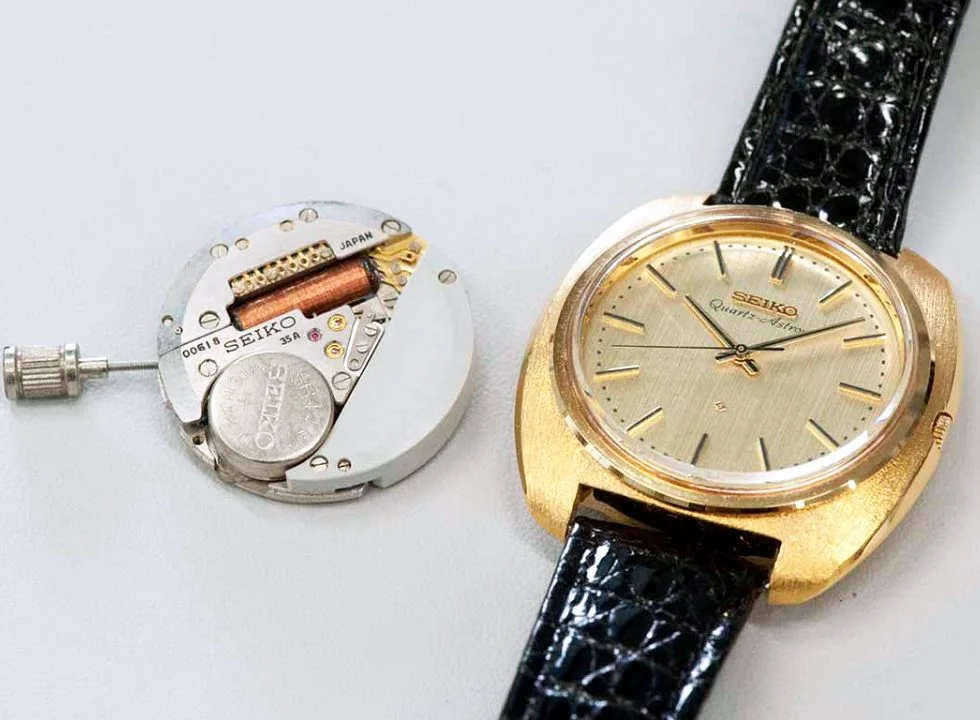
Seiko's first quartz watch Quartz-Astron and its movement |
Swiss watchmakers eventually realized they had to do something.
But it was too late for many.
So the industry went through bankruptcies, job cuts, and consolidation.
And different brands merged as SMH group after the intervention of the Swiss government and banks.
They appointed Ernst Thomke as CEO.
SMH's urgent goal was to respond to the Japanese invasion.
So Thomke's team came up with a new watch and manufacturing process in a year.
It was against everything Swiss watchmakers stood for until that time:
Plastic, cheap, and suitable for mass production.
But this gave them another problem.
They could mass produce.
But people wouldn't buy millions of the same watch.
They needed a good reason for customers to buy it.
So they hired marketing consultant Franz Sprecher to help with positioning.
Sprecher immediately saw the opportunity.
Nobody wanted just another cheap watch - people already got the Japanese watches for that.
This new watch had to have a story.
So Sprecher decided to position it as a disposable fashion accessory.
It was the perfect fit.
They could use the production capability to create colorful designs.
So even if consumers owned another watch, they could buy it as a second watch.
And they named it after the second watch concept - Swatch.
|
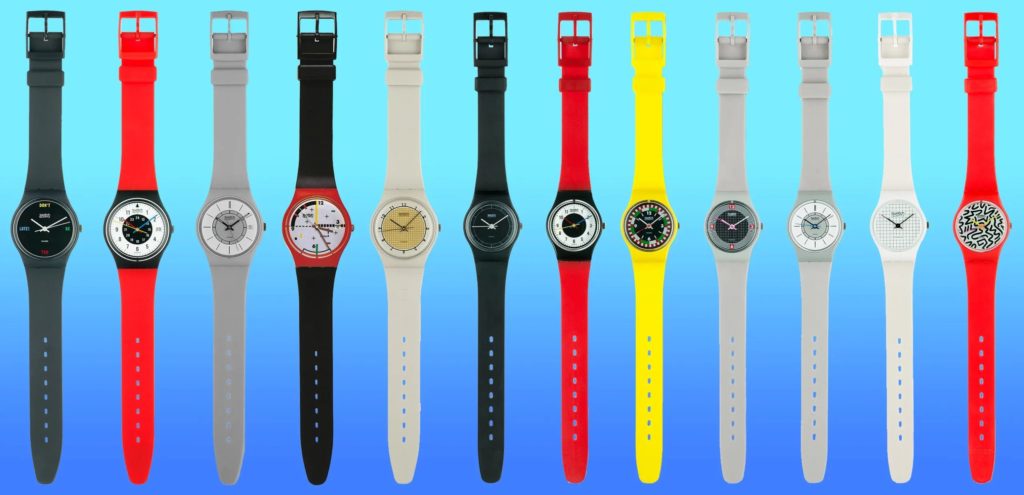
The first 12 Swatch models |
Swatch was launched in 1983.
And it quickly became popular.
People loved the colorful designs.
And some people started buying Swatch to show they didn't need a Rolex.
SMH's management took advantage of the early hype.
They made deals with designers and made special Swatch collections.
And owning a Swatch became a trend.
The brand became so successful, that SMH even changed its name to Swatch Group.
And Swatch's success bankrolled the revival of the group's other brands like Omega, Longines, and Tissot.
In the end, Swiss watchmakers' late response to Japanese brands saved their industry.
And today Swatch Group is one of the biggest watchmakers with a $10+ billion market cap.
Refocusing capabilities & designing a new value
Here's the thing.
Swatch's story is full of business lessons.
We could talk about the production miracle, leadership changes, and cost-cutting.
But at its core, management successfully repositioned the company.
First, they diagnosed the problem correctly.
They had to leave their pride aside and respond to Japanese watches.
Or they were going to die.
Then they refocused the capabilities of the company from dozens of unsuccessful brands to the right challenge.
And they managed to build a cheap mass-market watch.
But that was the internal part.
They also found the right value proposition to sell the new watch to customers.
So it was the perfect example of repositioning a company:
Refocus the capabilities on the right challenge (internal).
And redefine the value proposition (external).
|
A good repositioning pushes your brand toward the ideal position |
You don't have to go through an existential crisis like the Swiss watch industry to reposition a business.
Smart executives and founders do it before they have to.
They keep redefining themselves to continue growing.
But some signals always warn you that it's a good time to change.
Sales reach a plateau.
Marketing campaigns stop working like before.
And teams try to pull the company in different directions.
Some executives ignore these signals.
Some others redefine themselves and take the business to the next level.
We talked about the internal and external aspects of repositioning.
But let's dive deeper.
Two key points to consider to reposition your brand:
1. Focus your capabilities to a new customer
It's a known story.
Ferruccio Lamborghini was a tractor manufacturer.
One day he complains to Enzo Ferrari about the clutch issues with his Ferrari.
Proud Enzo Ferrari says:
"The clutch is not the problem. The problem is you don't know how to drive a Ferrari and you break the clutch."
So Ferruccio decides to start his own sports car brand.
But here's the funny thing.
Only that encounter makes Lamborghini realize that he can make a sports car.
He knows more than anybody about engines.
And he has a team of engineers already good at manufacturing vehicles.
So he thinks:
"Why don't I use these capabilities to make a sports car instead of a tractor and make 3X profits?"
And that gave birth to Lamborghini as we know it today.
|
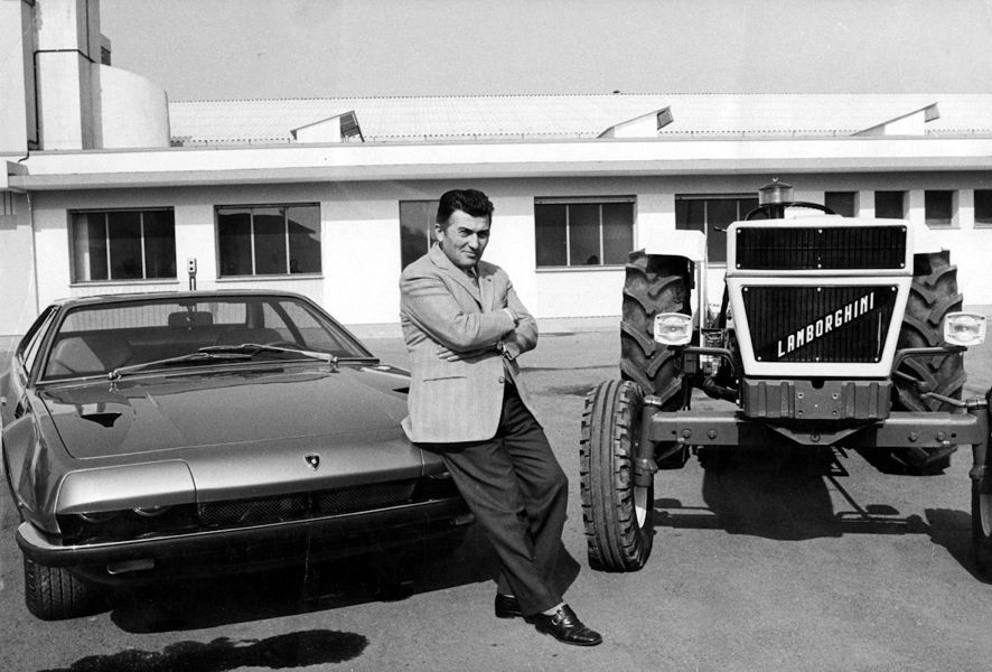
Ferruccio Lamborghini between his sports car and tractor |
Many founders and executives are like Ferruccio Lamborghini.
Their businesses already have the capabilities.
They have the know-how, talent, and tools to grow their business beyond what they can imagine.
But they work on creating the wrong value for the wrong customer.
Ferruccio Lamborghini realized instead of tractors for farmers, he could make sports cars for rich people.
And he built a much bigger business with the same capabilities.
So one important point for a successful repositioning is looking for a better target customer.
How can you increase the worth of your business's capabilities?
Maybe by focusing on another industry?
Maybe by targeting a specific segment within your customers?
You know what they say.
You can be a therapist for students.
Or you can be a therapist for CEOs.
Who would charge more?
Who would need fewer customers?
So question this and look for a better target segment for your business's capabilities.
Don't work on a tractor if you can make a Lamborghini.
2. Give customers a better reason to buy
Sometimes the problem is different.
You have a good product/service and the right target customer.
But you still don't sell enough.
Why?
Because you don't have the right value proposition.
So customers don't see a good reason to buy.
And your brand becomes invisible in the crowded market.
The solution?
Look at what the competition is doing.
And create a different value.
Find the right "job" for the customer and intentionally target a buying trigger.
Besides being cheap, Swatch turned watches into a disposable fashion accessory.
And it gave consumers the identity of a trendy, stylish person, unlike monotone Japanese watches.
That's why people loved (and bought) it.
So think about your brand.
What's the story?
What value do customers get beyond the obvious functional features?
Remember, you might have the best product/service.
But customers will only buy if you give them a good reason to buy.
Share this article
"We are actually better than the competition. But customers don't get it."
This is a common phrase I hear in the discovery calls.
And when we dig deeper, weak positioning (hence weak messaging) is almost always the cause.
There is a good product/service.
But it's not clear who it is for, what value it provides, and how it's different than the competition.
So customers don't get it.
And it's frustrating.
You do all the hard work to create a great product/service.
But customers don't see it that way.
So as we talked about above, the solution comes down to going back to the drawing board and gaining clarity on the value proposition.
Only then do customers see why they should choose your brand over others.
And everything else becomes easier.
Want to make your marketing more effective?
We help B2B brands nail down their positioning and create a clear, powerful message that sells.
Fill out this form, let's chat.
In case you missed it:
You can reply to this email with your thoughts and feedback.
I'd be happy to hear from you - I read and reply to all messages.
And you can connect with me here on LinkedIn.
Have a great day.
Ozan
Founder - Frontera
|